
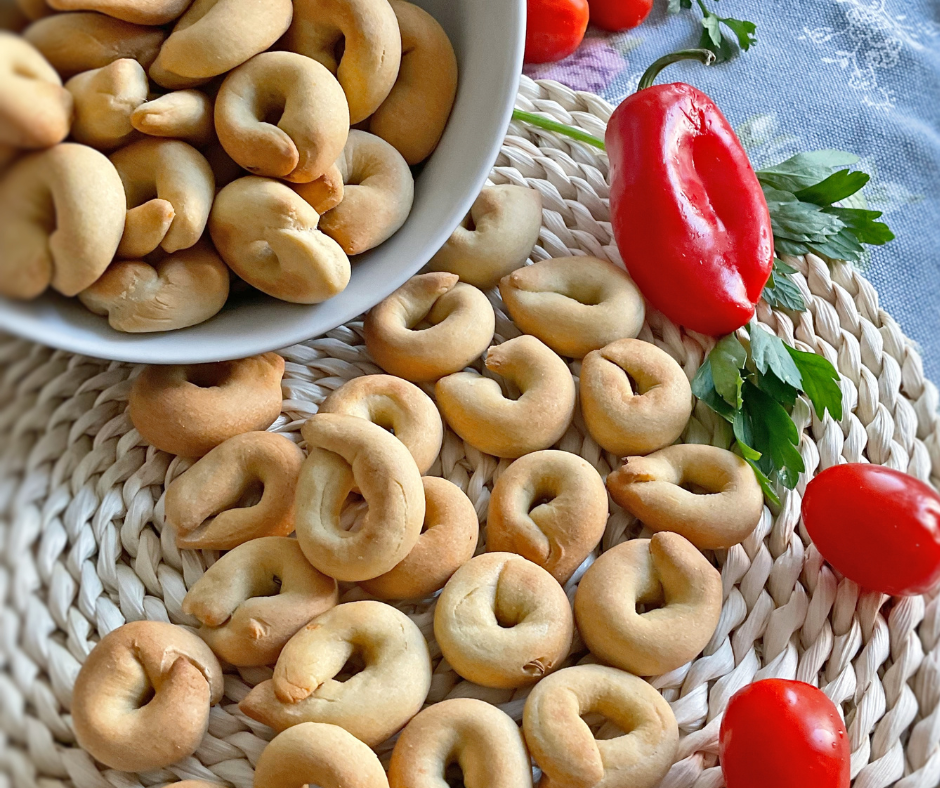
The video of the renowned actress Olivia Wilde enjoying tarallini during her vacation in Italy went viral just a few days ago. She asked, so here we answer.
These delectable and crunchy donut-shaped snacks, hailing from Apulia (aka Puglia), remind us that even the simplest foods can provide immense satisfaction, and even create a healthy addiction.
Origin of the recipe:
The history of tarallini is not entirely clear, with Puglia and Campania both making claims. Perhaps the oldest tradition is that of the Apulian taralli (larger than tarallini), which have been prepared in peasant homes since the 1400s using a few readily available ingredients. One legend tells the story of a mother, compelled to think creatively during times of famine, who invented them with few ingredients she had at home to feed her children (Facchini, 2020).
Boiling, yes or no?
Apulian and Neapolitan tarallini differ in one crucial aspect. Apulian tarallini are first boiled and then baked; and they must be boiled a day before baking in order to dry thoroughly. Neapolitan tarallini go directly into the oven, baked but never boiled. The boiled version is distinguishable by its smooth, shiny surface.
What are the ingredients of the original tarallini recipe?
The essential ingredients for preparing Apulian and Neapolitan taralli are four: water, oil, flour, and salt. The practice of adding wine came later, stemming from the usage of low-quality oil with an unpleasant odor. Wine was used to mask the smell of the oil (La Terra di Puglia, n.d.).
Idioms:
“Taralli e vino” – an expression of relief when troubles come to an end.
Due to the delightful crispiness of tarallini, they have traditionally been enjoyed alongside wine in both Puglia and Campania. The saying “finishing with tarallini and wine” still persists today. This idiom symbolizes the tendency to overindulge in wine and then resort to tarallini to soak up the alcohol, and perhaps help with the hangover (Facchini, 2020).
The recipe versions:
As one might expect, there are numerous recipes that share many similarities but differ slightly in the amount of flour or wine or oil used. I’ve experimented with various Italian recipes and am sharing one winning formula – a quick and delicious no-boil recipe.
Flour:
I begin with a note about flour. As I have mentioned in previous recipes, when you attempt Italian recipes abroad, the ratio between flour and liquids may vary a lot depending on where you are. In particular, since common American flours contain more proteins and gluten than many Italian flours, they tend to need more liquids before kneading (fortheloveofslice.com, 2023).
The recipe:
Prep time: 40 minutes
Ingredients
All-purpose Flour: 18 oz (I used organic stone ground flour)
Fine salt: 1 teaspoon
Extra virgin olive oil: 4 oz
Dry white wine: 7 oz
Fennel seeds: 1 tablespoon (optional)
Baking powder: 1/2 teaspoon
Method
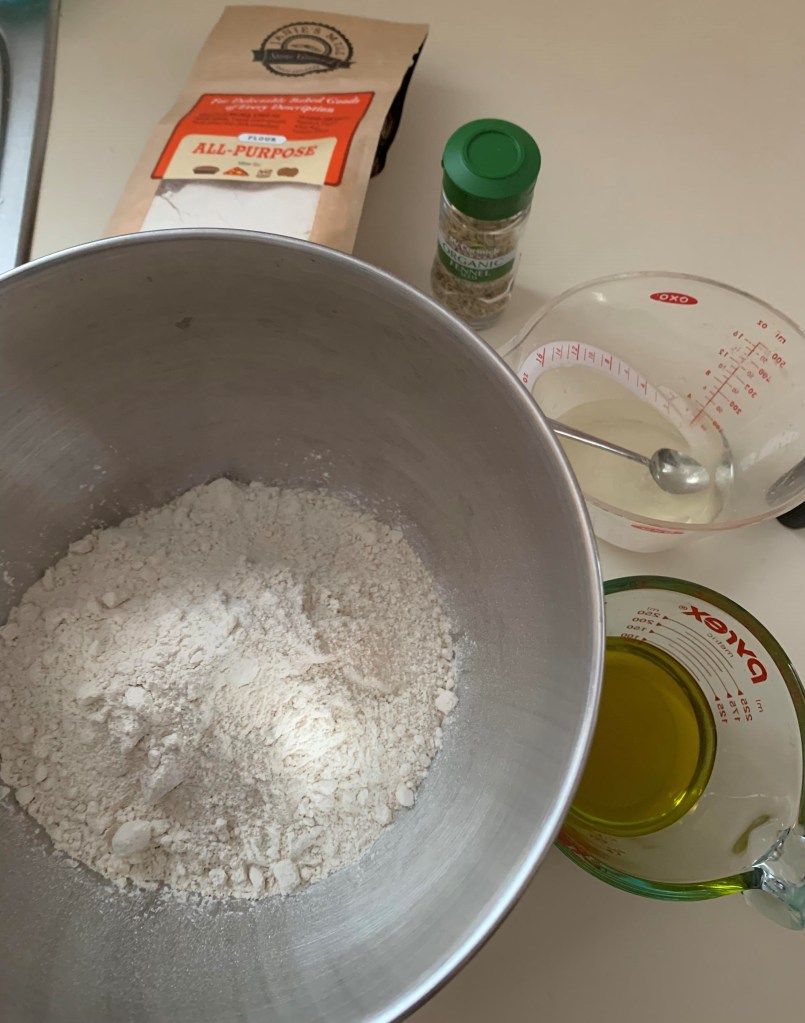
1. In a bowl, combine flour, salt, and baking powder.
2. Create a well in the center of the flour mixture and add extra virgin olive oil. Begin mixing the dough until it is lumpy.
3. Gradually add the room-temperature wine, mixing and kneading vigorously to form a soft, smooth dough. Add fennel seeds and adjust the dough with more liquids if needed (you can use sparkling water instead of wine or oil at this point).
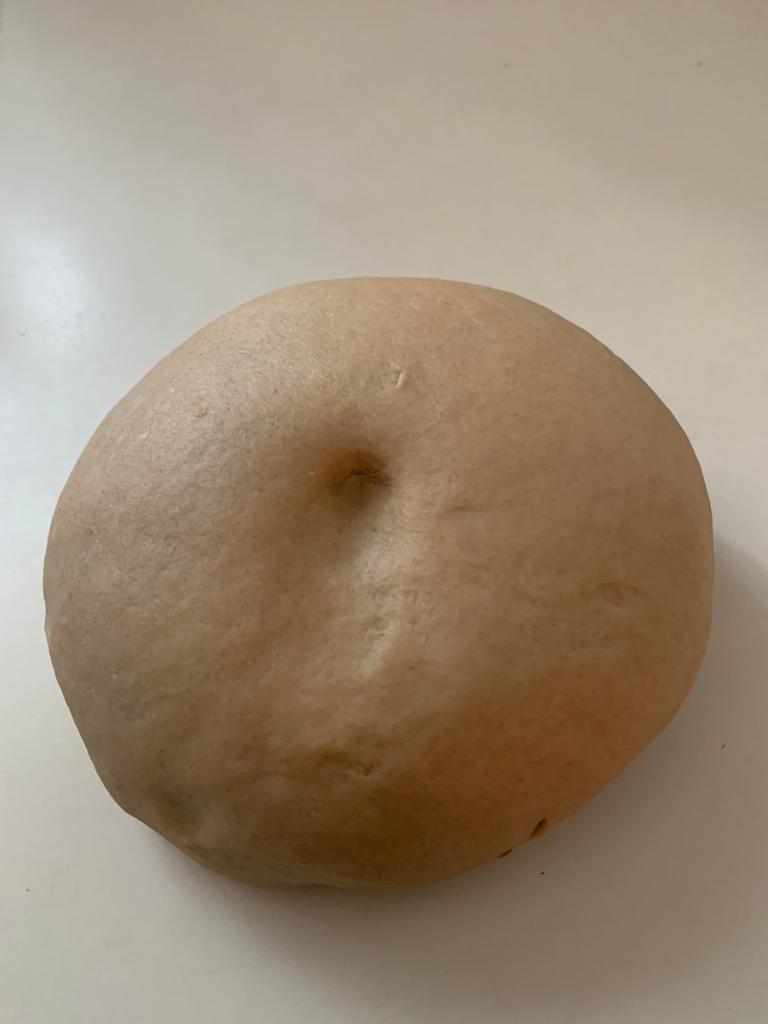
4. Wrap the dough in cling film and let rest for at least 30 minutes.
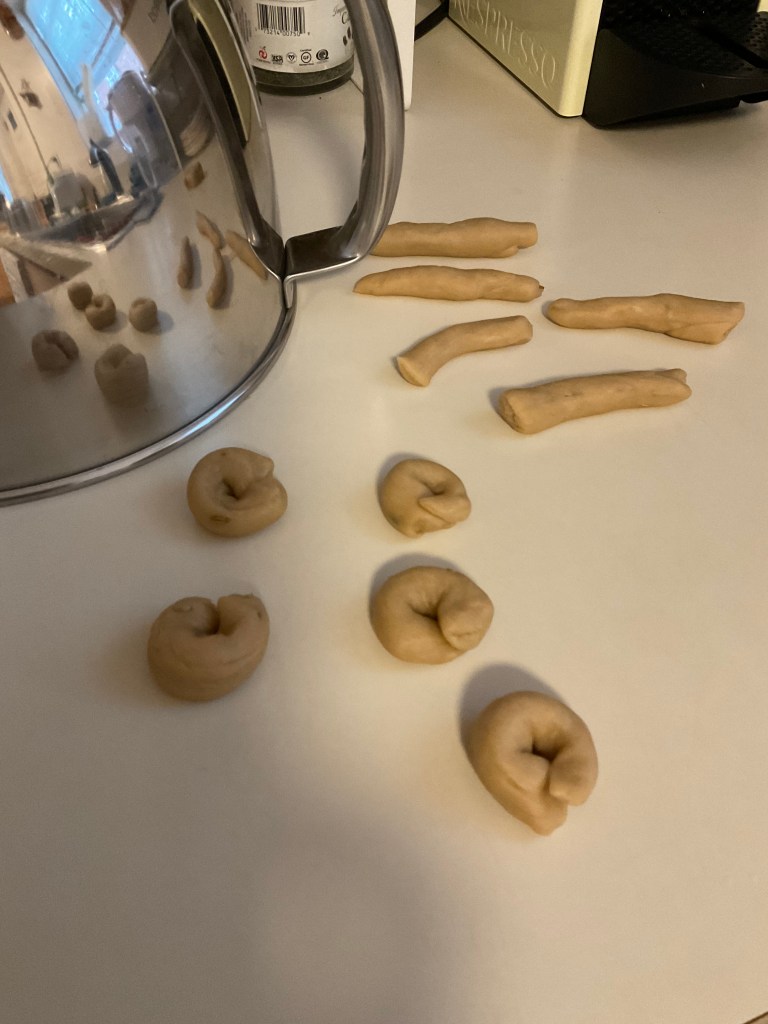
5. After 30 minutes, unwrap the dough, cut it into strips, and roll each strip with your by hand to make “snakes” approximately 1cm thick. Cut the “snakes” into pieces about 3-4 fingers wide. Join the ends of each piece to form a small circle, and press the ends together securely to prevent them from opening during cooking.
6. Preheat the oven to 380°F (Fahrenheit).
7. Line a baking pan with parchment paper and arrange the tarallini with adequate space to prevent them from sticking while baking.
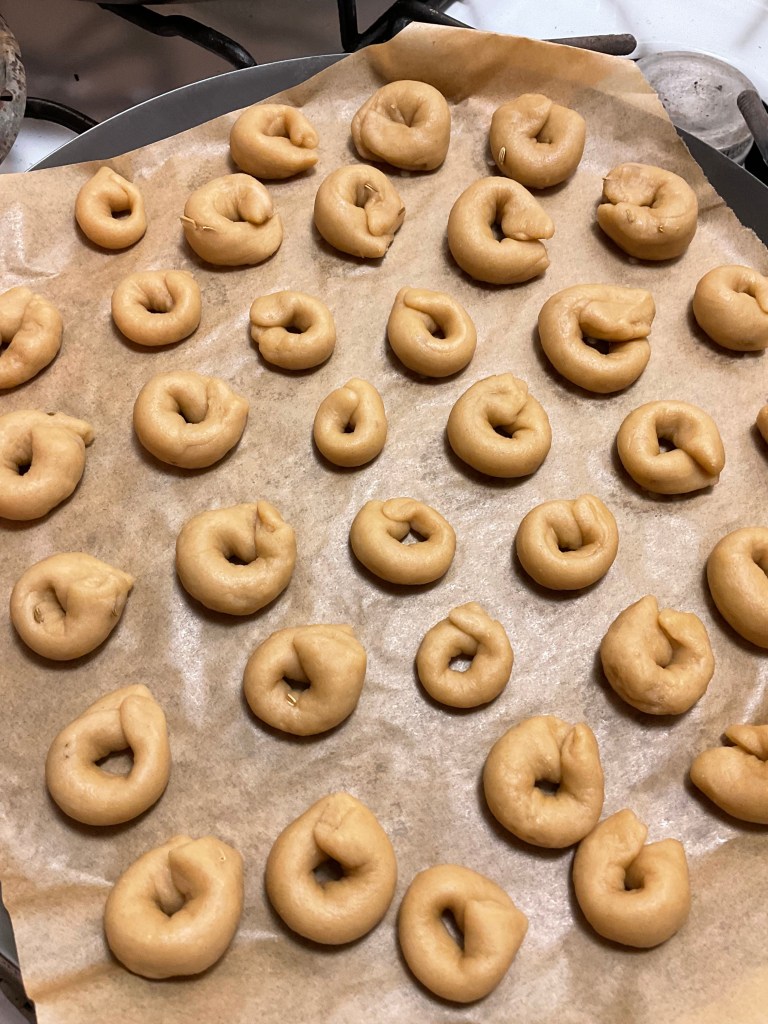
8. Bake the tarallini for about 20 minutes, adjusting based on your oven type.
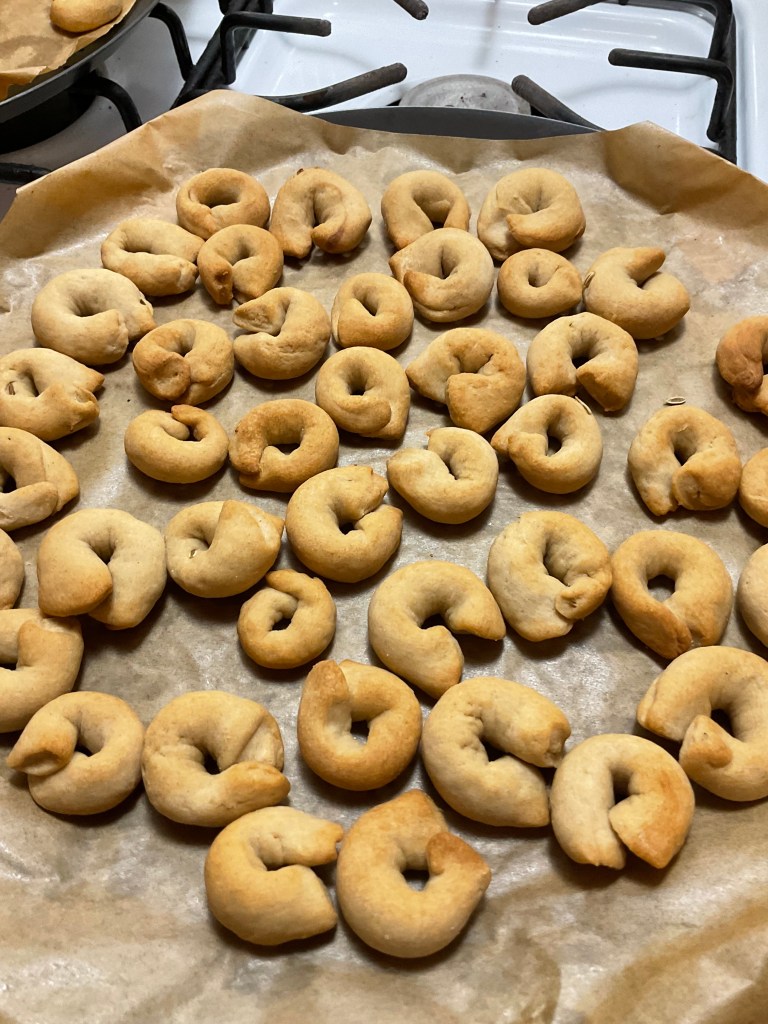
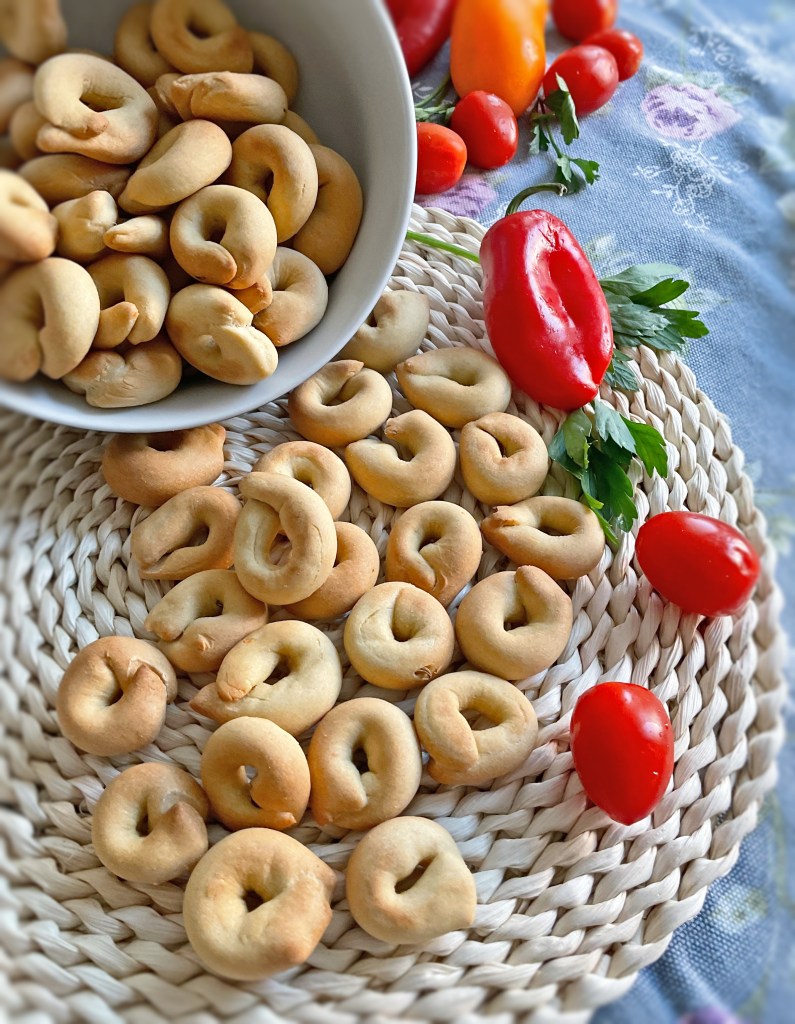
9. Allow the tarallini to cool, and enjoy them as an aperitivo, appetizer, or snack.
Tips:
If you are making tarallini for kids, you can substitute sparkling water for the wine, adding a few tablespoons of a savory grated cheese such as Pecorino Romano to compensate for the lost flavor.
You can also use rosemary in place of fennel, or coarsely ground black pepper, finely chopped black or green olives, oregano, tomato paste, dried onions, or chillies (maybe not for the kids).
Regarding the flour, you can also use half all-purpose and half sifted semolina flour. Some versions also include mashed potatoes in the dough.
References
Facchini, L. (2020, November 23). Taralli pugliesi o taralli napoletani? Specialità a confronto. Gambero Rosso. https://www.gamberorosso.it/notizie/storie/taralli-pugliesi-e-napoletani-storia-caratteristiche-e-differenze/
fortheloveofslice.com. (2023, April 5). American Flour vs Italian Flour: Understanding the Differences and Their Applications – For The Love Of Slice. Fortheloveofslice.com. https://fortheloveofslice.com/american-flour-vs-italian-flour-understanding-the-differences-and-their-applications/#:~:text=The%20main%20difference%20between%20American
La Terra di Puglia. (n.d.). Breve storia dei taralli pugliesi e campani. LaTerradiPuglia Shop. Retrieved August 16, 2023, from https://www.laterradipuglia.it/gastronomia/focacce-frise-pitte/taralli/breve-storia-dei-taralli-pugliesi-e-campani
Wilde, O. (2009). olivia wilde (@oliviawilde) | Twitter. Twitter.com. https://twitter.com/oliviawilde

 casaboston.blog
Leave a comment