
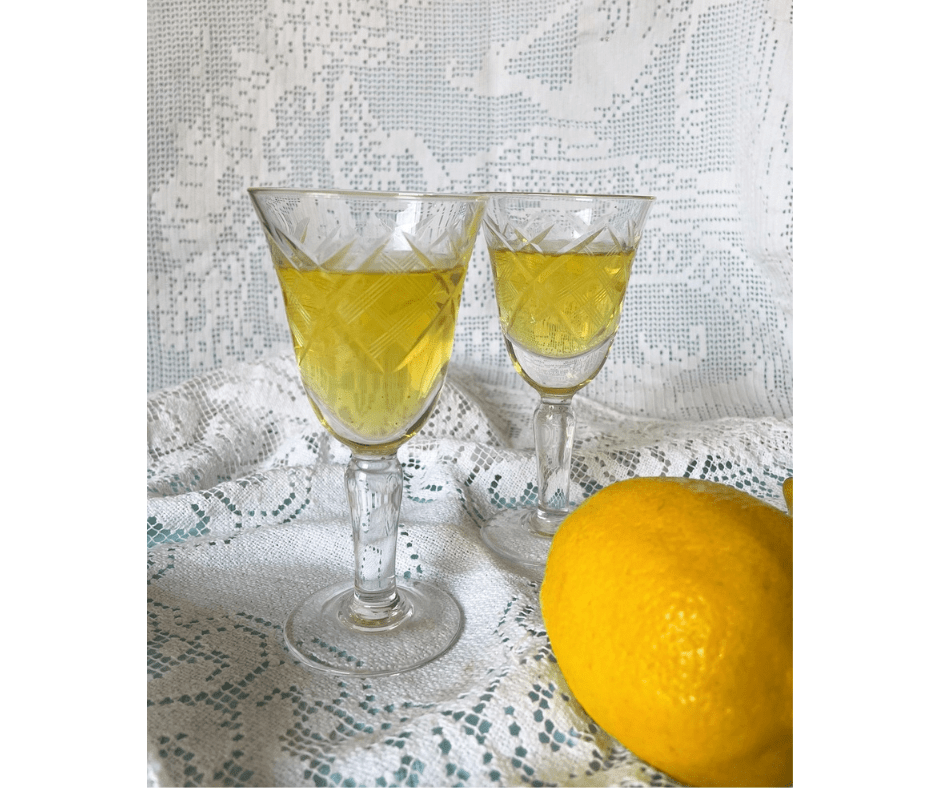
Limoncello is a symbolic liqueur of the Amalfi coast (province of Naples), which has gained worldwide fame. Fresh and fragrant, it is crafted by macerating lemon peels in alcohol. In addition to being served as an after-dinner digestivo, it is frequently used in desserts and creams.
Brief history
Limoncello’s roots extend back to the early 1900s on the enchanting Capri Island. How was it invented? One story is that a certain Mrs. Maria Antonia Farace tended a flourishing citrus garden with an abundance of lemon trees. And what do you do when life gives you lemons? Make lemonade, of course – or, in Mrs. Farace’s case, limoncello. Her legacy continued when her nephew established a flourishing restaurant business, serving his grandmother’s authentic limoncello recipe.
Another legend asserts that at the time of the Saracen invasion, fishermen and farmers sipped limoncello in the early hours of the day to fight the cold weather. Yet another version credits monks from a local monastery with inventing the recipe, savoring it between prayers. As often the case, the truth remains elusive (Federvini, 2010).
My Mother’s Limoncello Recipe
My mother, a native of Naples, has made limoncello for at least 40 years using the recipe below. Two important notes about ingredients:
First, my mother always uses organic lemons from the Amalfi Coast. While this is easy for her (she lives in Italy and has relatives back home), it is not for me. Sadly, organic-lemons-from-the-Amalfi-Coast are not widely available in Boston. So, I use other organic lemons available here at the grocery store. What matters is that the lemons must be organic and ripe so the zest is full of flavor and oils rather than chemicals and pesticides.
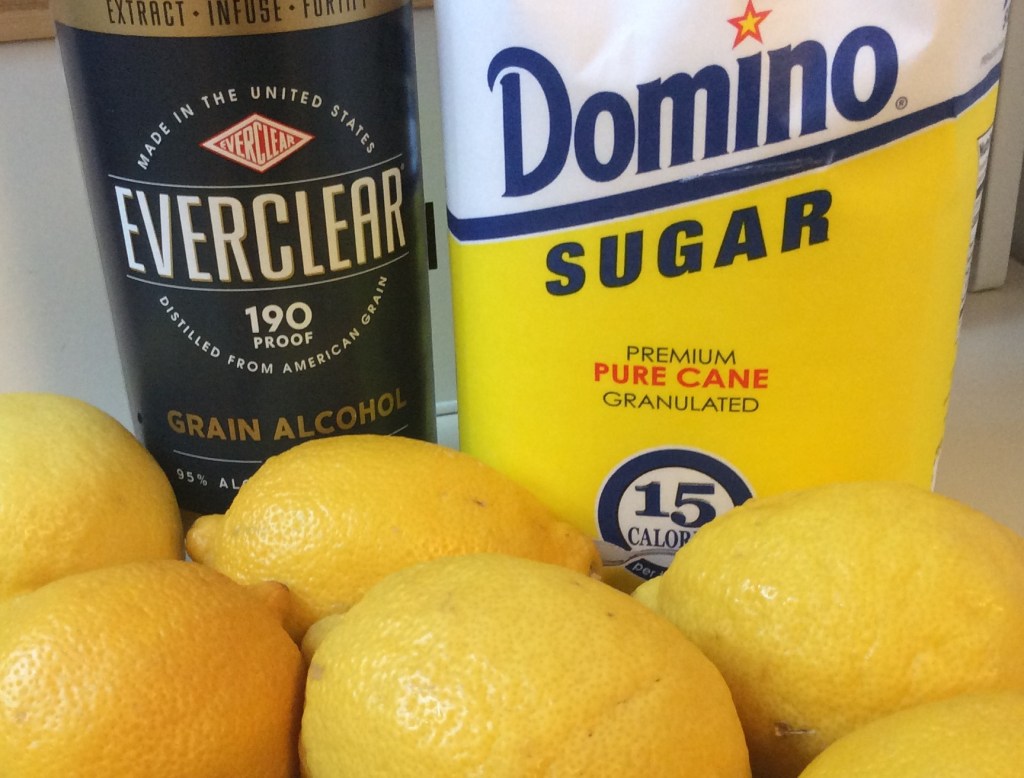
The second note is about alcohol and sugar. I recommend using grain alcohol rather than vodka for a smooth taste. However, grain alcohol in the U.S. is stronger than its Italian counterpart, requiring some adjustments to the original recipe. My first attempts with grain alcohol, using my mother’s recipe, yielded an overpowering concoction that masked the delicate lemon essence. Diluting with water resulted in a delightful and invigorating “elixir.” Homemade limoncello should capture the essence of lemons without excessive sweetness, though some sugar must be added, as below.
Limoncello
This recipe is simple but requires a lot of precision, therefore I recommend using a scale to weight the lemon peel, and a measuring cup in milliliters.
You can double this recipe as you like to obtain more liquor; it makes a great Christmas gift.
Instruments:
- Wide-mouth 1-gallon glass jug with an airtight lid
- 1 sharp small knife for peeling lemons
- A few clean glass bottles with corks (or more, depending on their size)
- Ladle
- Saucepan
- Funnel
- Sifter
- scale or a graduated pitcher
Ingredients:
- 100/105 grams of lemon peel (about 6 large organic lemons, more in case of small lemons)
- 95-degree alcohol 500 ml
- Sugar 620 grams (you can use white or brown sugar but remember this will affect the color of the final Limoncello)
- Water 1000 ml (tap or bottled)
Method:
Thoroughly rinse the lemons. Soak them for at least 30 minutes before rinsing under running water.
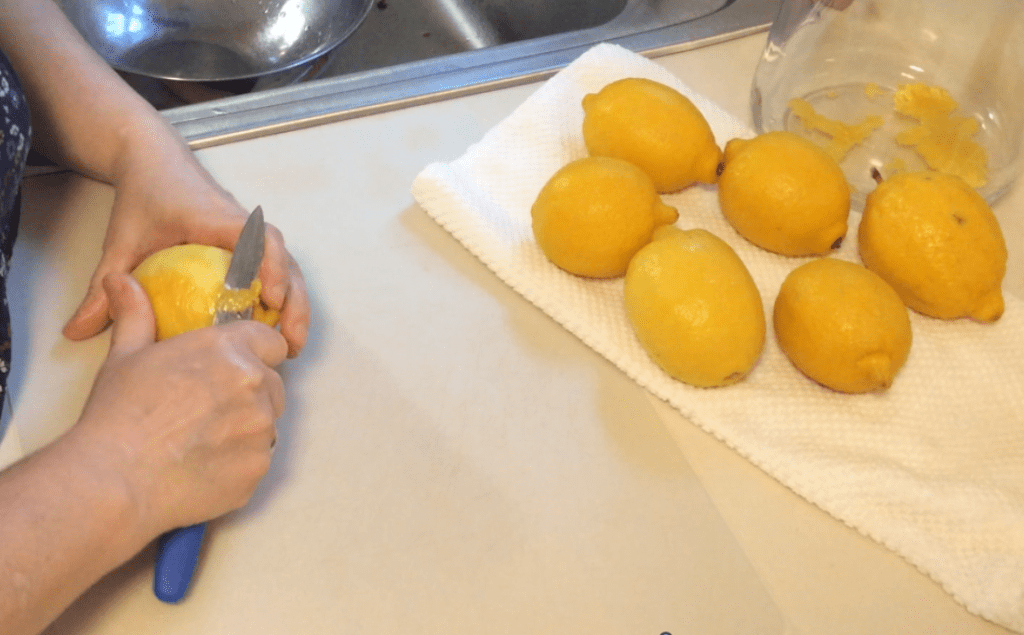
Peel the yellow zest, absolutely avoiding the white pith (see tips* for how to use leftover peeled whole lemons).
Place lemon peels into a clean 1-gallon glass jug, then add 500 ml of grain alcohol.
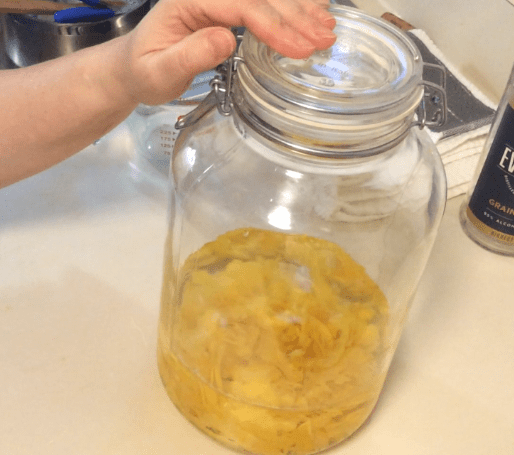
Seal the jug with its lid, gently shake, and allow the mixture to macerate for one week.
Keep the jar away from excessive light or sunlight (I cover the jug with a cloth to make sure it does not get any light). Give it a gentle shake once per day, to blend the contents. After one week the color of the mixture will be an intense yellow color.
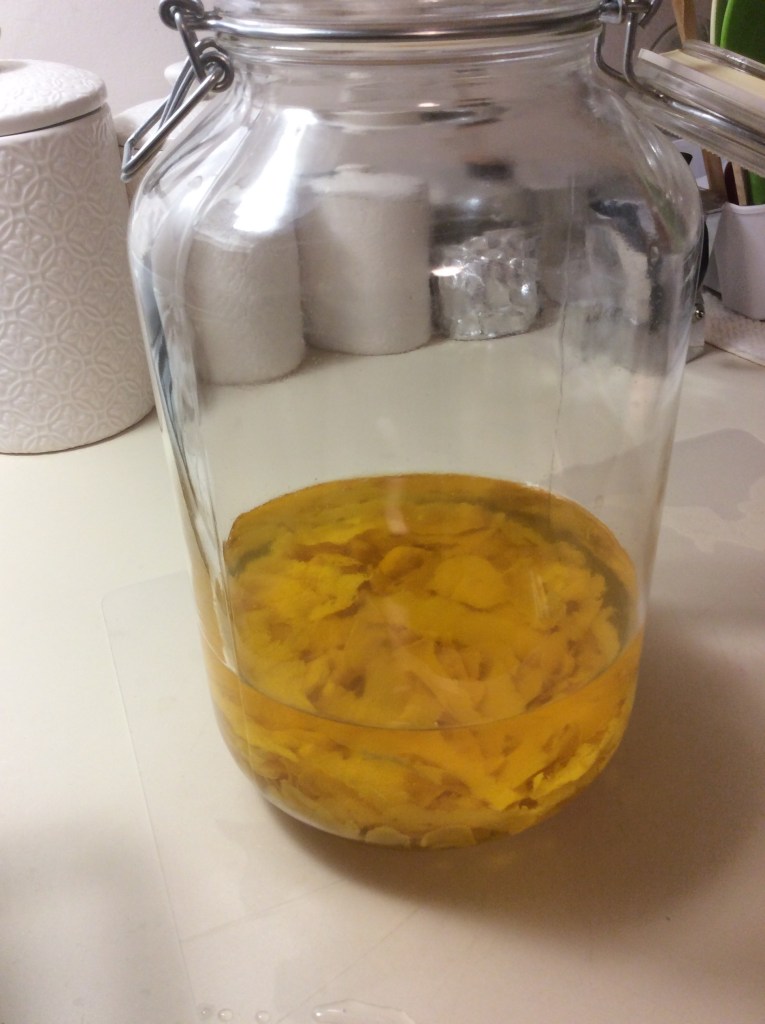
After one week, set 1000 ml of water to a boil in a large saucepan.
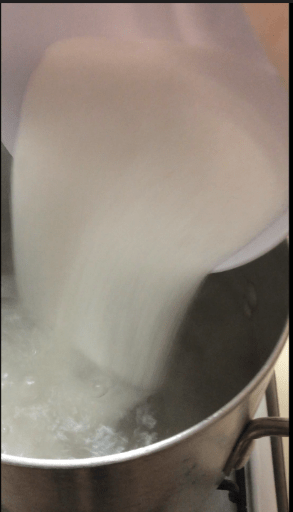
Once boiling, turn off the heat and add 620 grams of sugar. Mix to dissolve the sugar.
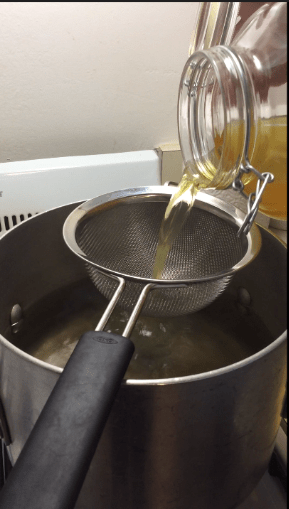
Once the sugar-water mixture cools, position a sifter atop the saucepan. Gradually ladle the lemon-infused alcohol from the jug into the sugar-water mix, retaining the lemon peels in the sifter.
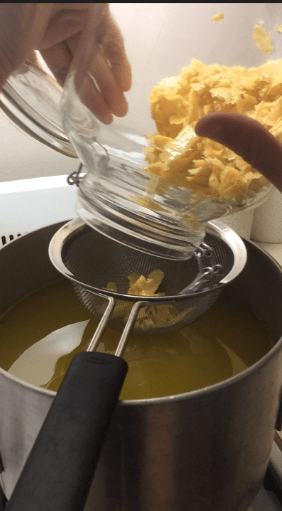
Blend the mixture thoroughly and use a funnel to fill each of the bottles. Seal and store the bottles away from light.
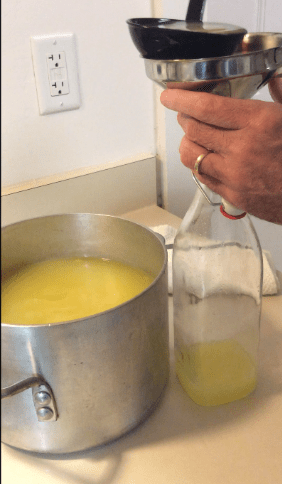
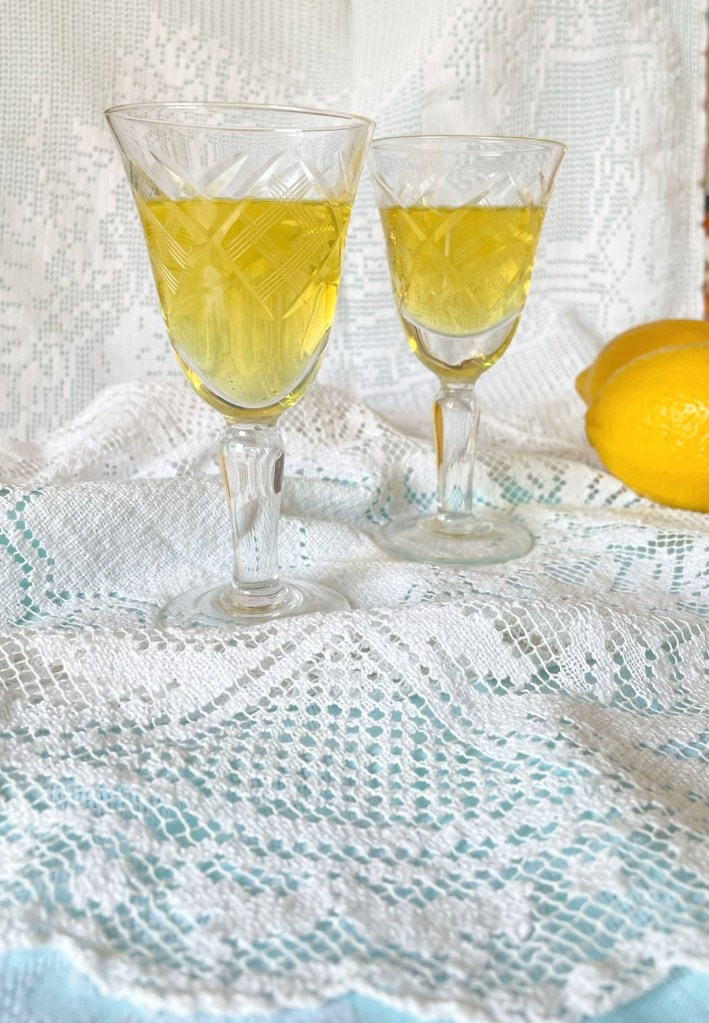
After a week, your limoncello is ready to enjoy. Chill the bottle in the refrigerator and serve ice-cold.
Tips:
Once prepared, corked limoncello bottles can be stored for extended periods. Always refrigerate the limoncello before serving.
Limoncello also complements cake dipping, imparts flavor to custard or Diplomat cream (Chantilly all’Italiana), lemon curd, and even cocktails.
While the duration of lemon peel infusion into the alcohol may vary, one week is generally sufficient. Refer to expert Prof. Bressanini‘s experiments for further insights.
The juice from the peeled lemons has many uses. You can store it in the fridge or freeze it in ice-cube trays and thaw as needed. It can be used to make dressings for salads (e.g., citronette), marinades for meats and fish, or even marmelade. You can also use it to prepare lemonade or a lemon curd. Finally, you can make lemon sorbet, and serve your Limoncello alongside it for a delightful and refreshing summer dessert.
References
Bressanini, D. (2015, December 21). Le ricette scientifiche: il limoncello (anche veloce) – Scienza in cucina – Blog – Le Scienze. Bressanini-Lescienze.blogautore.espresso.repubblica.it. http://bressanini-lescienze.blogautore.espresso.repubblica.it/2015/12/21/le-ricette-scientifiche-il-limoncello-anche-veloce/
Bressanini, D. (2018, December 11). Prepara in 1 giorno il LIMONCELLO (scientifico). http://Www.youtube.com. https://www.youtube.com/watch?v=W5C0Qyt44dU&t=536s&ab_channel=DarioBressanini
Federvini. (2010, May 5). Breve storia del Limoncello – Federvini. http://Www.federvini.it. https://www.federvini.it/trend-cat/215-breve-storia-del-limoncello
Forioso (mamma), A. (n.d.). Limoncello Recipe.
Ticozzi, M., & Rossi, M. (n.d.). photos. https://www.instagram.com/materiae.jewelry/?hl=en

 casaboston.blog
Leave a comment