
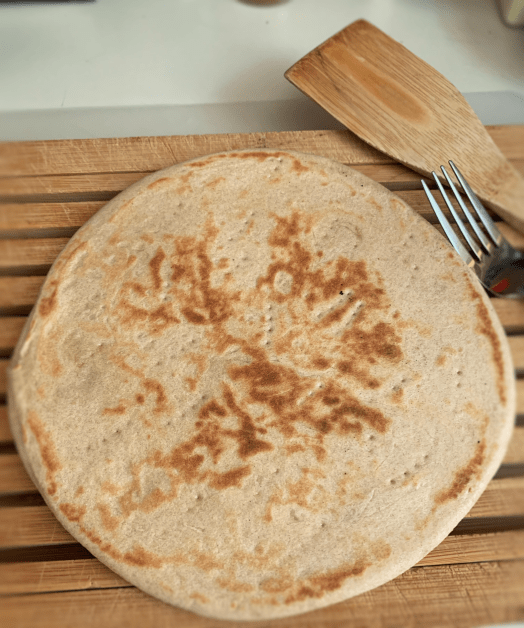
La Piadina Romagnola
Piadina is a traditional food of the Romagna region, particularly the cities of Forlì, Cesena, Ravenna, and Rimini. The poet Giovanni Pascoli described piadina as “the national food of Emilia Romagna.” His beautiful poem “La Piada” celebrates this simple and fragrant flat-bread. In Romagna, piadina is called “piada,” derived from the dialect word “pié,” an idea inspired by Pascoli.
The ingredients are simple: typically white flour, lard or olive oil, salt, and water. In the past, piadina was cooked on a terracotta dish placed over an open fireplace (known in Romagna as “teggia” or “testo”), though today, flat pans or large electric griddles are more common.
As with many traditional recipes, variations exist across the region, and each family swears they prepare the “authentic” version. Broadly, there are two main types of piadina: (1) a thicker version prepared in the areas of Forlì, Cesena, and Ravenna, and (2) a thinner version prepared in Rimini and its province.
The version I prepare follows the recipe provided by the Spadoni mill, located in Coccolia, Ravenna. I prefer this recipe because it is particularly fragrant, keeps well for several days, and can be frozen after cooking and quickly reheated.
When discussing Italian recipes, I often hear two common concerns: that Italian recipes are complex and time-consuming, and that single individuals often struggle to prepare Italian meals while staying within a budget. I believe piadina is an excellent solution to both challenges: it is cheap, easy to prepare, can be stored or freezed, quickly prepared and filled with delicious, seasonal ingredients as needed.
Cost estimate:
Total recipe cost: $2.34 ($0.40 each).
Recipe
Ingredients
- all-purpose flour 1/1.10 pounds (450-500g) (I used stone-ground flour)
- extra virgin olive oil 7 teaspoons (35ml/30g) (instead of the traditional lard)
- room-temperature water 8 ounces (240ml/240g) (or half water and half milk, which I prefer)*
- salt 1 teaspoon (6g)
- unsweetened baking powder 1 tablespoon (15g)
- honey or sugar 1 teaspoon (5-7g) (optional but helps achieve a nice golden color)
Equipment
– 1 cutting board
– 1 rolling pin
– 1 blender
– 1 plate or a fairly large non-stick pan
Method
1. In a mixing bowl (or a heavy-duty blender), combine the flour, baking powder, and salt.
2. In another bowl, mix the water (or water and milk), oil, and dissolve the honey or sugar.
3. Gradually pour the liquids into the bowl with the dry ingredients.
4. Knead the mixture, adding a few extra spoons of water if needed, until the dough is consistent.
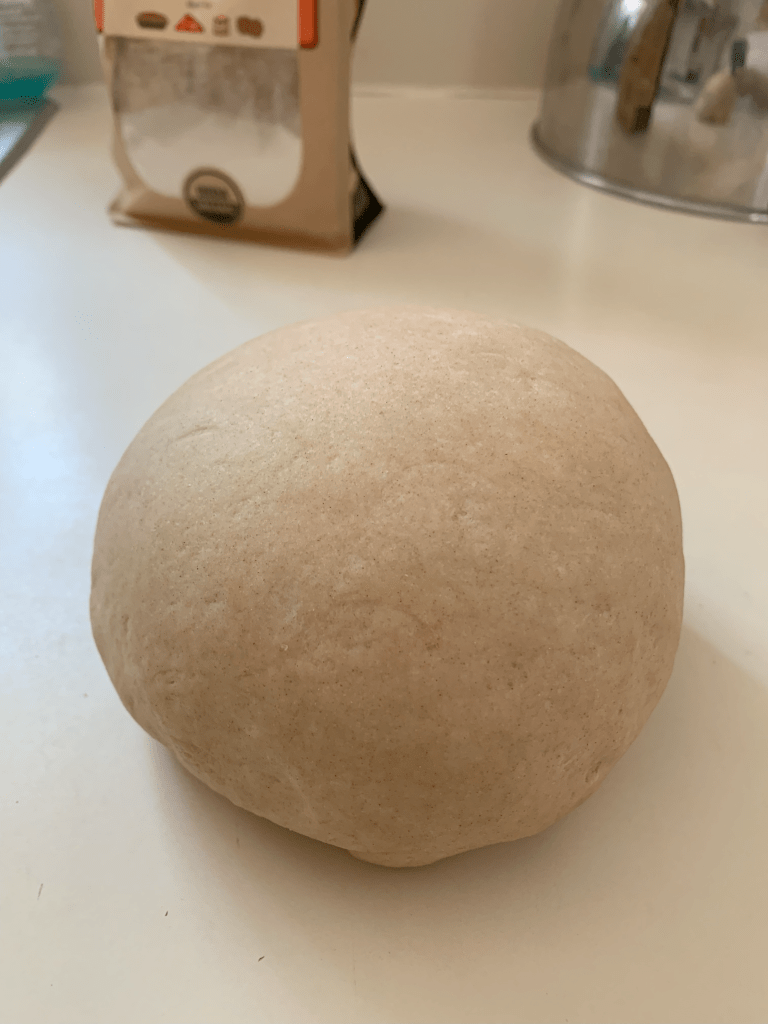
5. Remove the dough from the bowl and knead it by hand, if necessary. Cover it with a bowl and let it rest for half an hour on a pastry board.
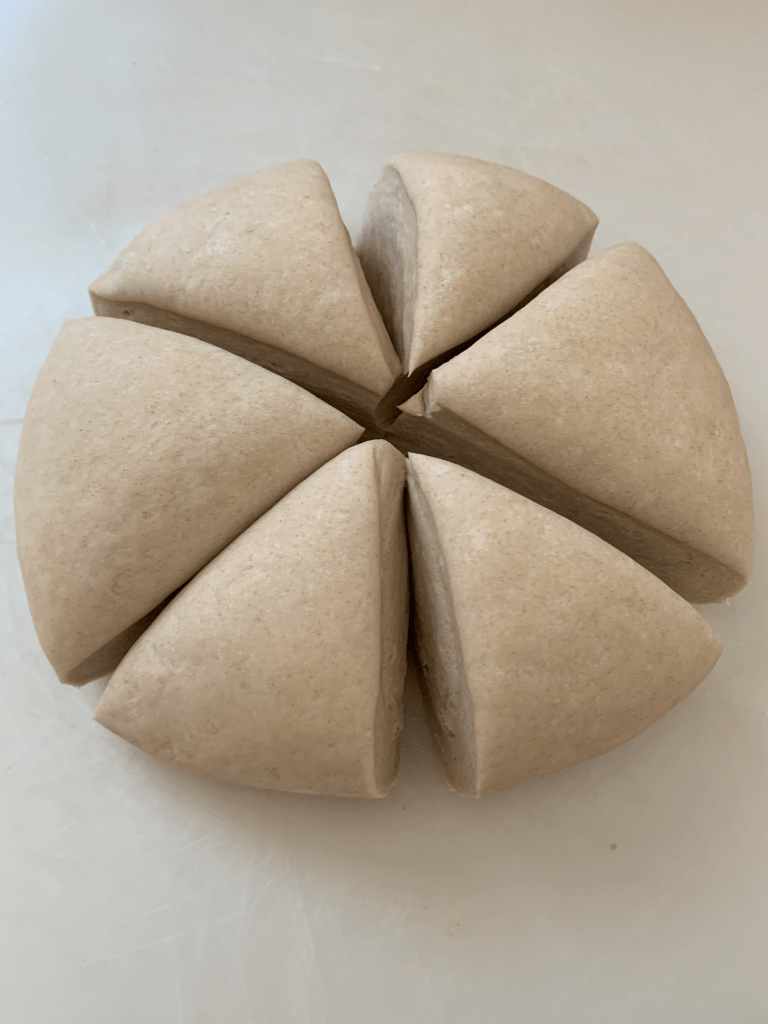
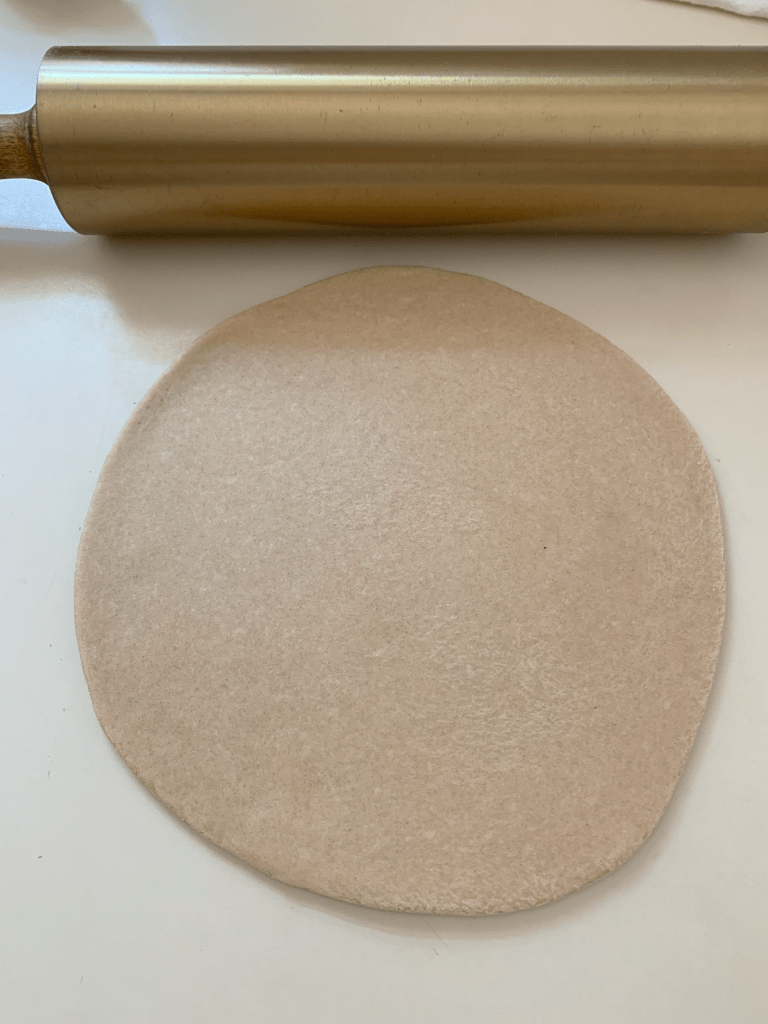
6. Divide the dough into 6-7 pieces and roll them out with a rolling pin to make discs that are 3-4 mm (1/8 inch) thick.
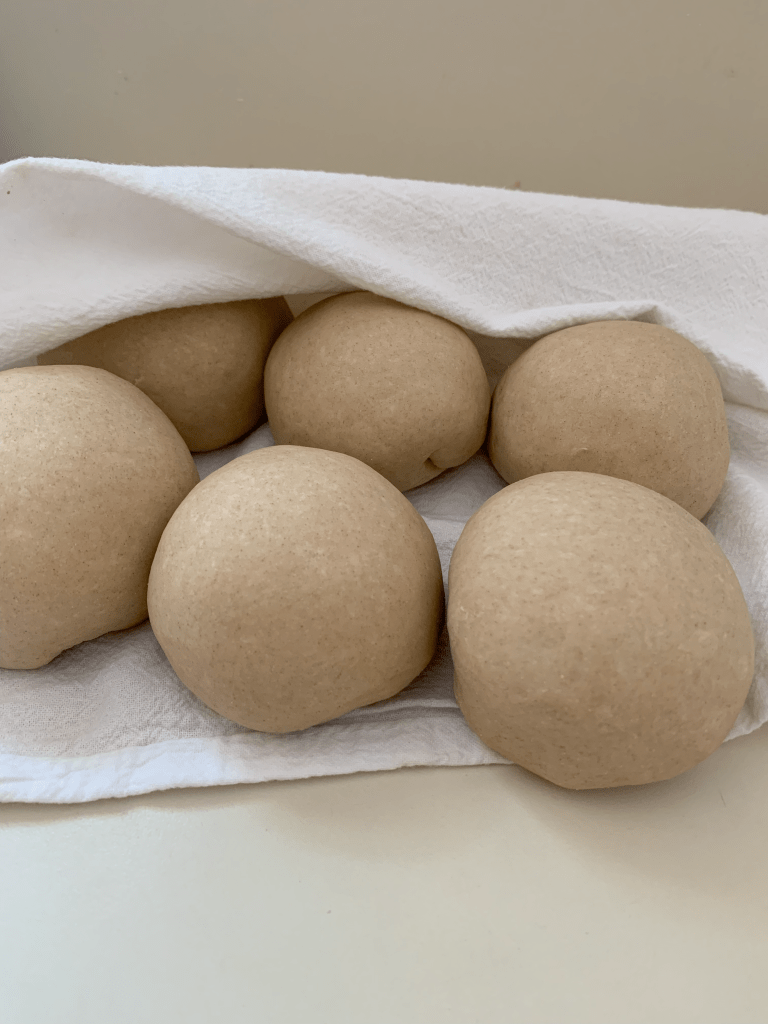
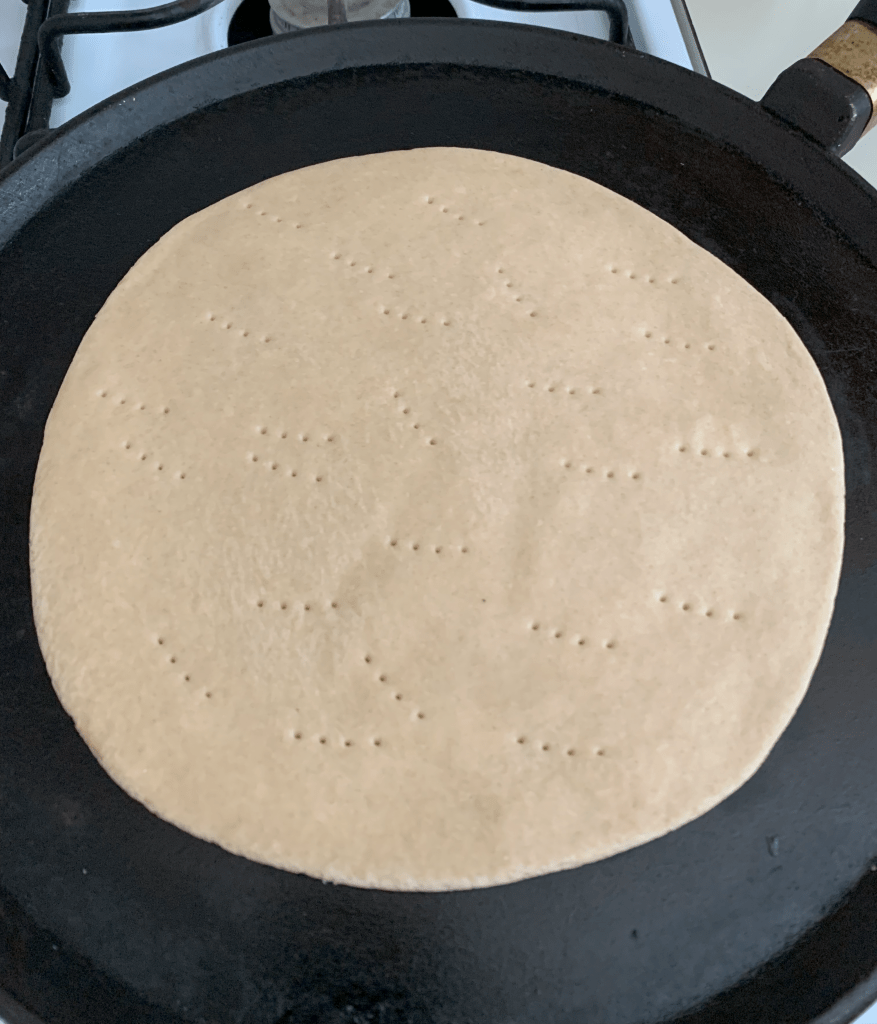
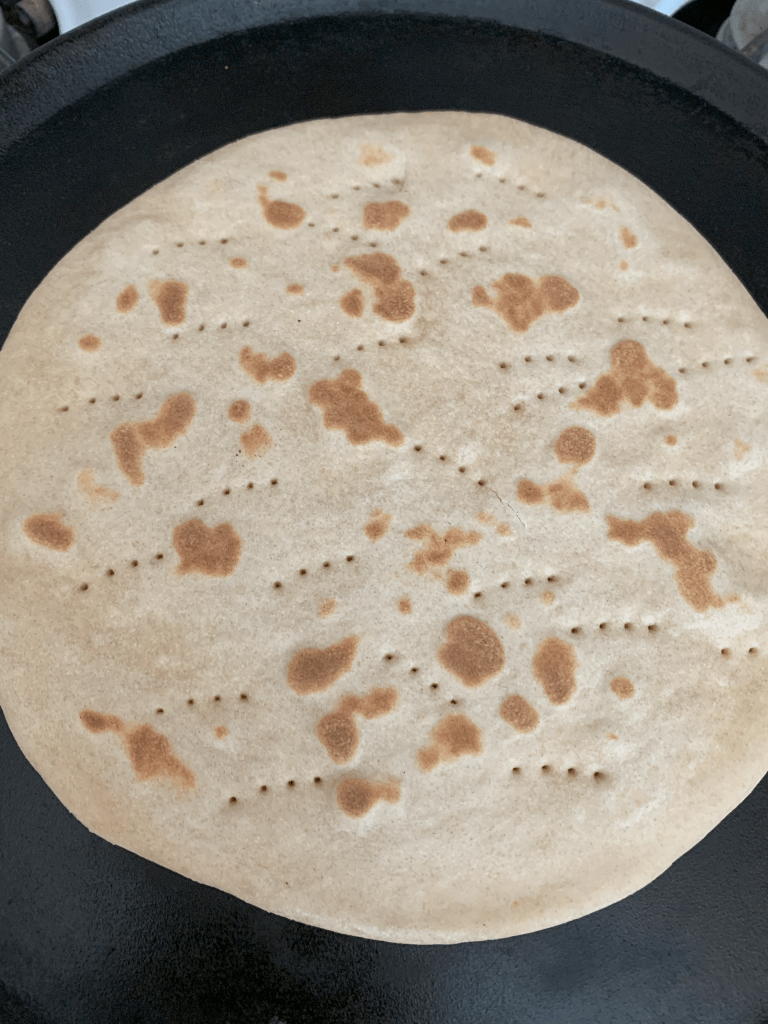
7. Heat a terracotta plate or iron skillet over medium heat. After the skillet is hot, place one piadina on it, and pierce the dough gently with a fork. Cook for about 3 minutes, until brown patches form on the underside, and flat, wide bubbles are forming on top. Flip and cook the other side for about 3 minutes. Remove when brown patches have formed on the underside.
8. Place the cooked piadina on a clean cloth on a clean surface. Do not stack them.
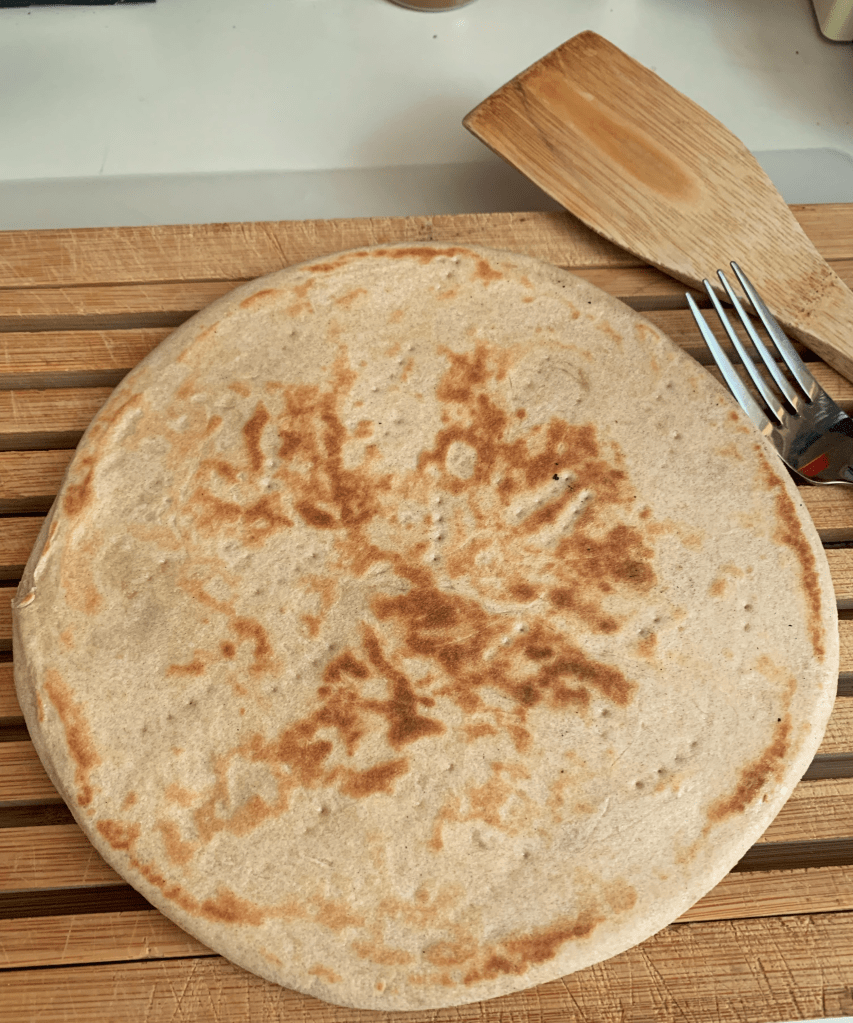
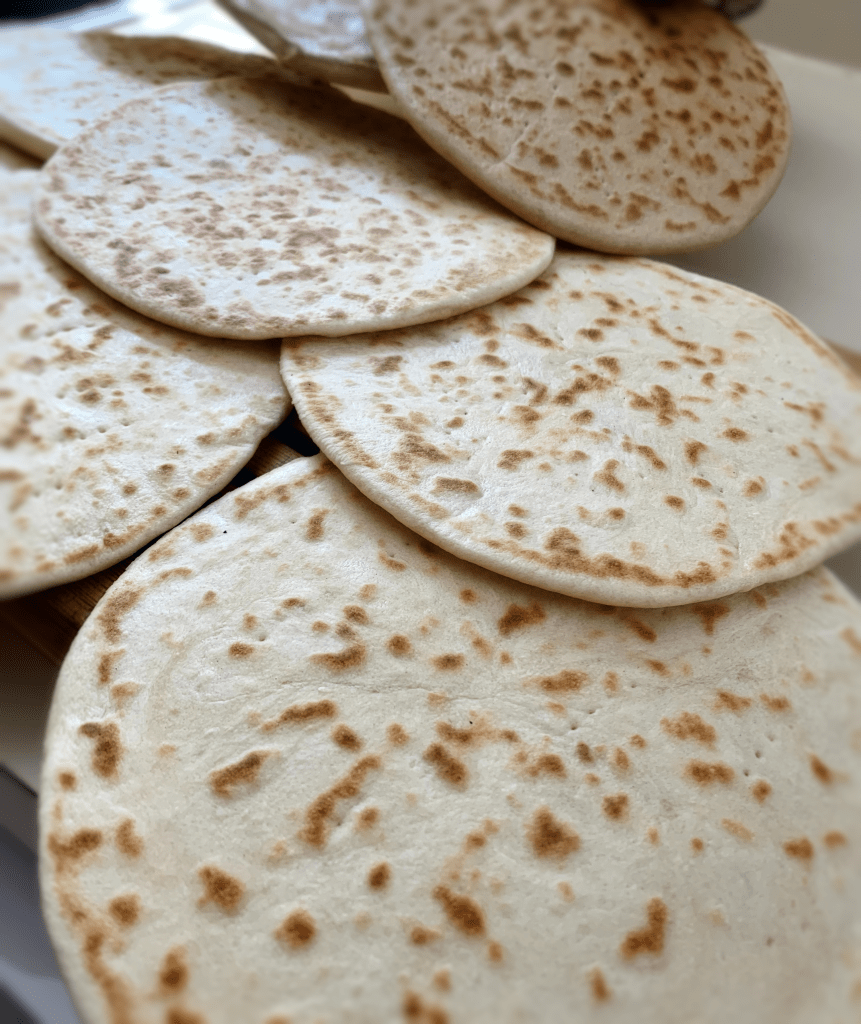
9. Cut the piadina into halves or quarters while still warm, and use two halves (quarters) to make sandwiches with whatever you like inside. Classic combinations are (i) Parma ham, arugula, and fresh squacquerone cream cheese, (ii) prosciutto and pecorino cheese, and (iii) sausage and red peppers. But the possibilities are endless, and you can let your imagination run wild.
Buon appetito!
Tips
If you do not want to use cow milk, you can use other non-dairy milk, but make sure it is not sweetened and has a neutral taste. The milk helps the piadina stay soft and fresh for longer
Piadina can be stored in tightly sealed plastic bags in the fridge for several days. Reheat them on the same pan used for cooking just before serving. Cooked piadina can also be frozen for longer storage.
You can also freeze the dough. After dividing the dough into small pieces, shape it into regular balls and freeze. To defrost, use a microwave or place the dough in the fridge the day before you need it. Then, roll it out and proceed with cooking as instructed in the recipe.
Piadina can be filled with arugula, fresh cream cheese, sun-dried tomato pâté, hummus, cured meats, or grilled vegetables. One of the most popular fillings in Romagna is Parma ham, arugula, and fresh squacquerone cream cheese.
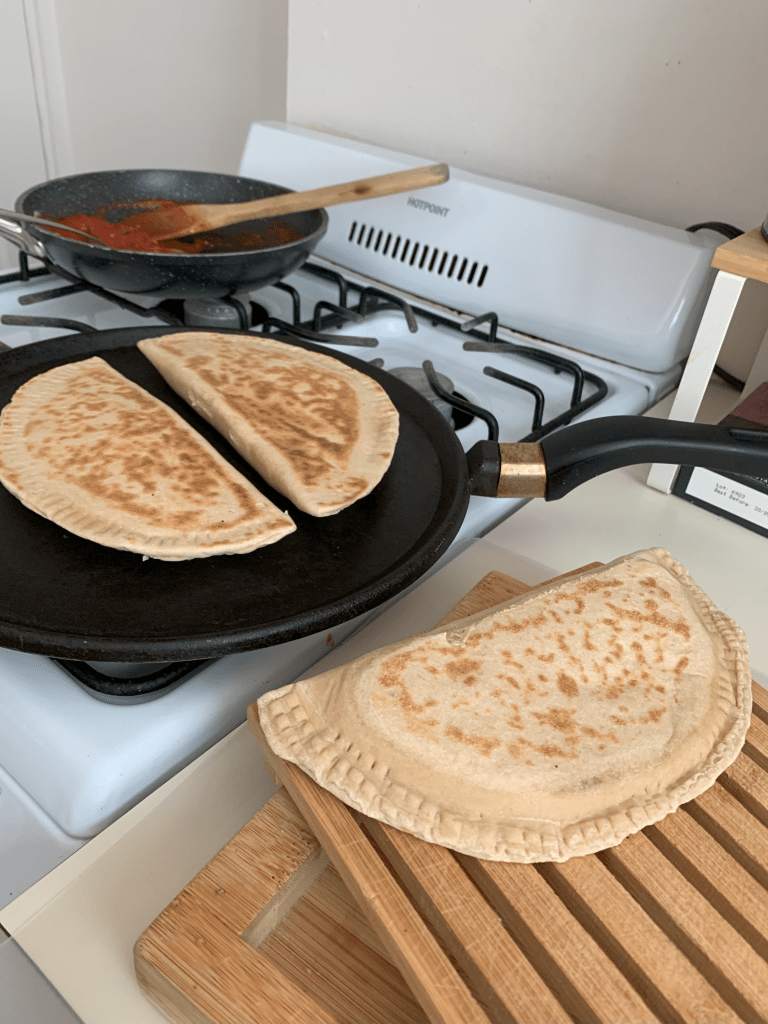
There is another version of piadina called “crescione.” Crescione is similar to a calzone pizza, made with piadina dough and filled with mixtures such as (i) cooked squash and potatoes, (ii) mixed greens (e.g., spinach, chard, and dandelion greens), or (iii) tomato sauce and mozzarella cheese.


 casaboston.blog
Leave a comment