
Since moving to Boston, I often find I need to modify my recipes because the ingredients are different from those I usually find in supermarkets in Italy. For example: American flour tends to require more water when making bread or pizza dough; the flavors of some vegetables are different; and some ingredients are not available.
On the other hand, some of the dishes I used to make in Italy turn out just as well here. This is my recipe for squash gnocchi. I also add potatoes to the dough to achieve a softer texture while ensuring it holds together well during cooking.
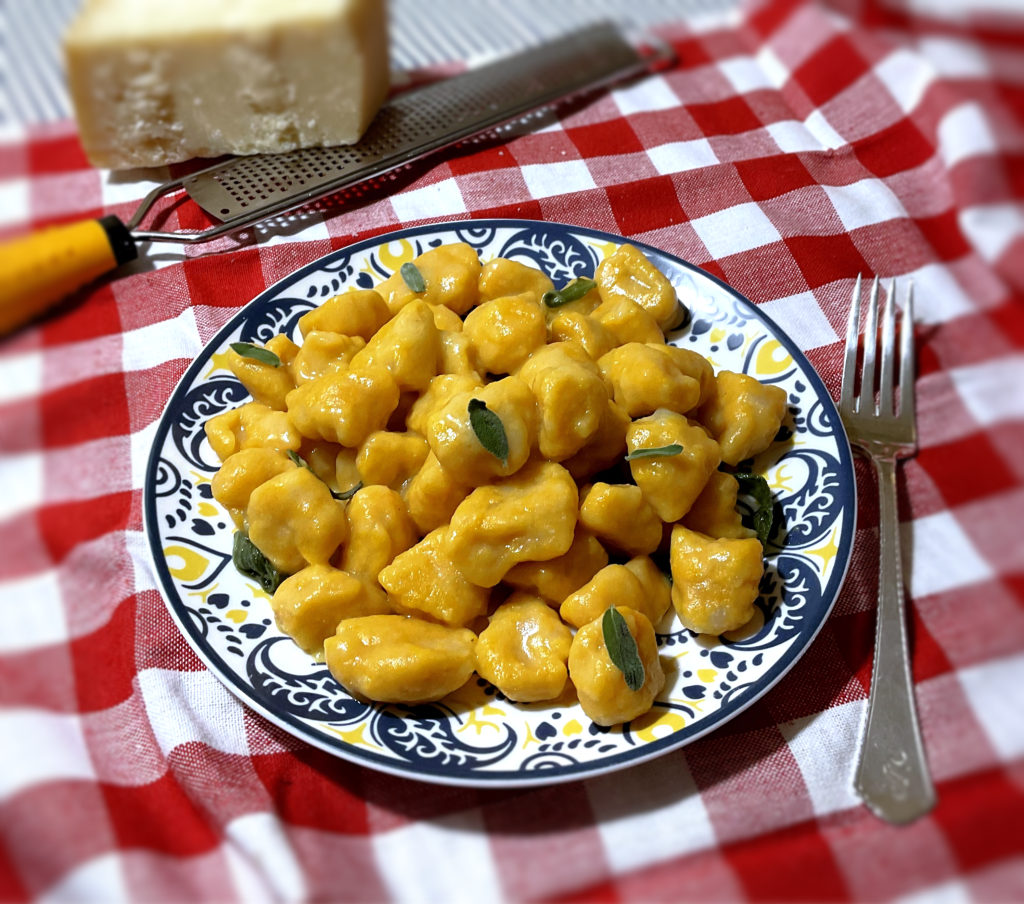
The result is cheerful and colorful gnocchi that can be served simply with melted butter, sage, and a generous sprinkle of Parmigiano Reggiano or Pecorino Romano.
What’s your recipe for squash gnocchi?
Ingredients for 4 servings
For the dough:
All-purpose flour 5.3 ounces
Potatoes 5 ounces (or 2 small potatoes)
Squash 18 ounces
Egg 1
Potato starch 1.8 ounces
Semolina flour for the dough 1 tablespoon (optional) + half cup to roll
Salt 1 pinch
Cinnamon 1 pinch
Nutmeg 1 pinch
For seasoning (Sage and butter sauce)
Unsalted butter 2 tablespoons
Sage leaves 3/4
Grated Parmigiano Reggiano cheese or Grana Padano cheese as you like
Equipment
1 Dutch Oven (or baking tray + parchment paper) to cook the squash, 1 bowl to smash the squash and the potatoes, 1 large pot, 1 pan, 1 chopping board, 1 knife or one spatula, 1 potato masher, 1 fork.
Method
Preheat the oven to 400°F. Take a Dutch oven and drizzle a teaspoon of extra virgin olive oil at the bottom. Peel the potatoes, wash them, and cut them into halves. Place the potatoes in the Dutch oven. Clean the squash, cut it into chunks of roughly the same thickness as the potatoes, and place them in the Dutch oven. Add one cup of water, cover, and bake in the oven for 30 minutes, or until both can be easily pierced with a fork. To preserve the nice color of the squash, I do not add any salt before baking.
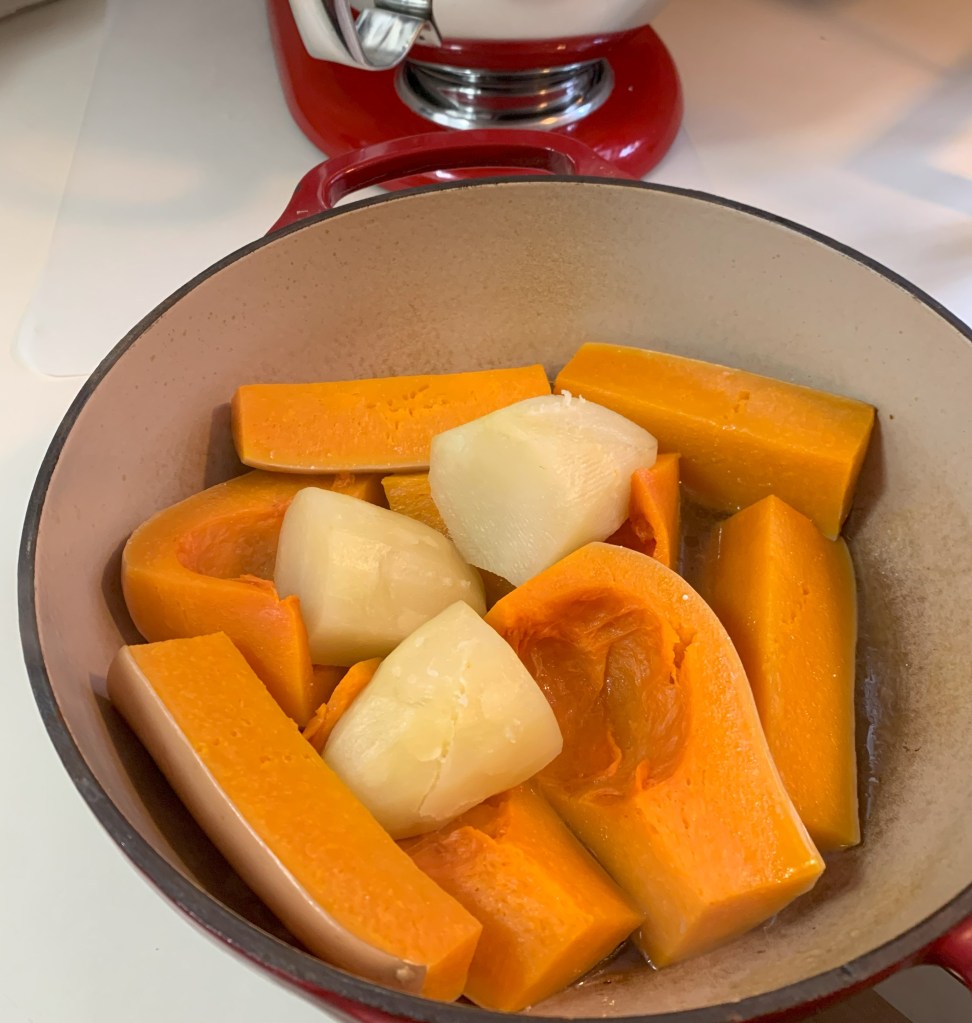
Once cooked, add salt to taste, peel the squash, and mash the potatoes and squash together in a bowl into a puree. Mix the squash and potato puree.
Mix the all-purpose flour with the semolina, and potato starch. Pour the mix onto the chopping board, create a well in the center of the flour mixture and add the other ingredients: smashed squash and potatoes, egg, nutmeg, cinnamon, and a pinch of salt.
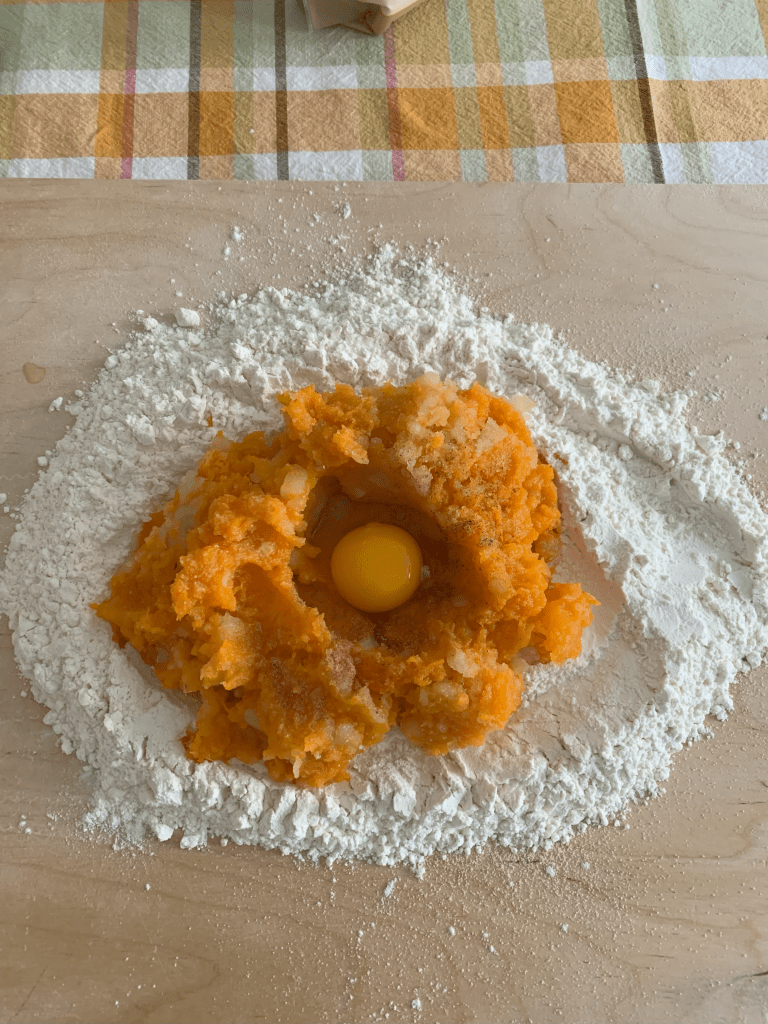
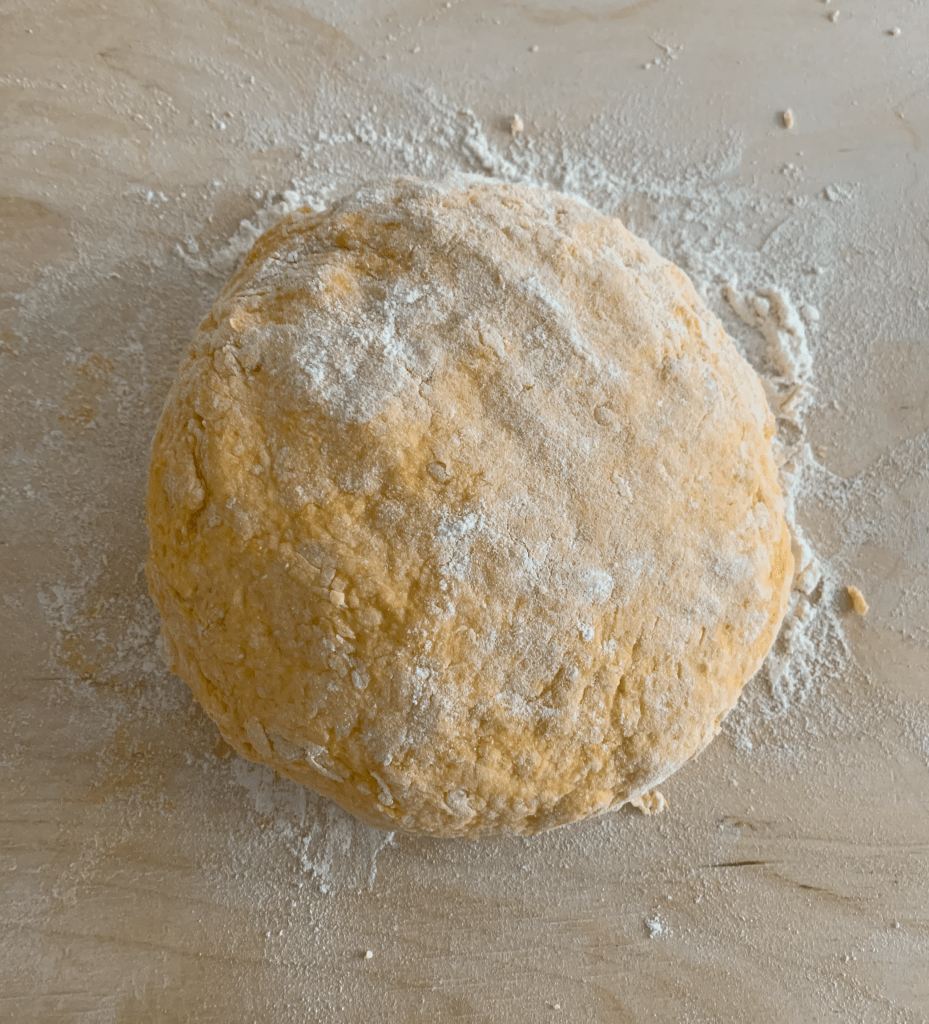
Combine the dough quickly, being careful not to over-knead (if you over-knead, then the dough becomes sticky).
Transfer the squash mixture to a lightly floured chopping board. Gently press the dough with your hands, adding more flour if necessary.
Cut the dough into long strips, approximately 1.5 cm thick. There is no need to roll them too much (a tip Chef Vissani shared many years ago on a TV show), as this helps prevent adding excess flour.
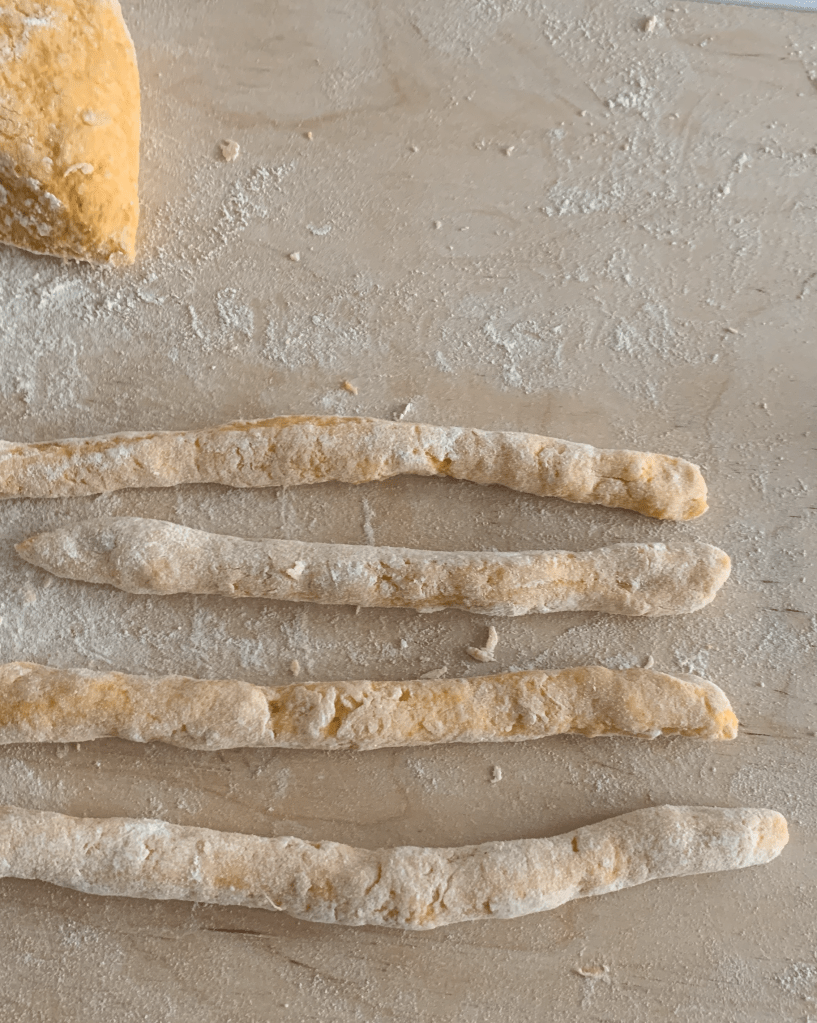
Next, cut the dough into small pieces, roughly the size of large olives.
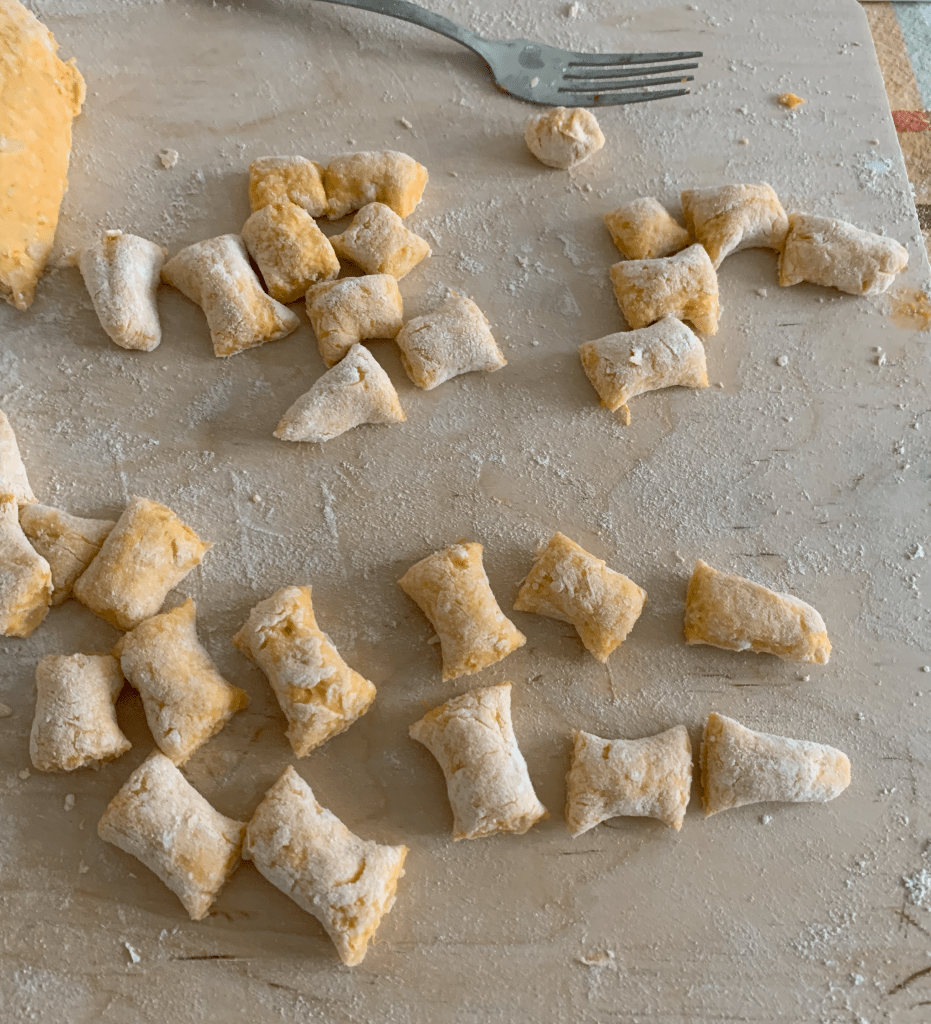
If needed, dust with flour. Gently roll each gnocchi on a fork to create grooves (you can skip this step if you are in a hurry, but grooves help the gnocchi hold the sauce).
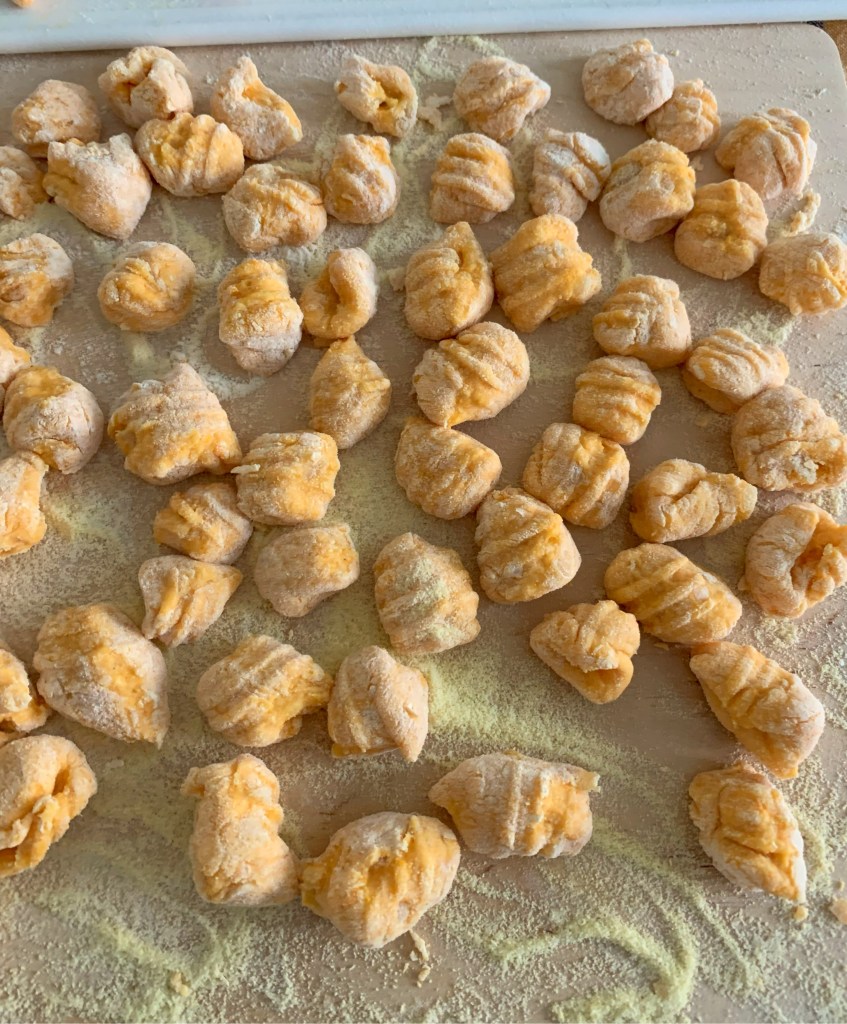
Meanwhile, bring a pot of water to a boil and add salt.
Carefully add the gnocchi to the boiling water, stirring gently with a wooden spoon. Cook for 3 to 4 minutes, or until the gnocchi float to the surface, indicating they are done.
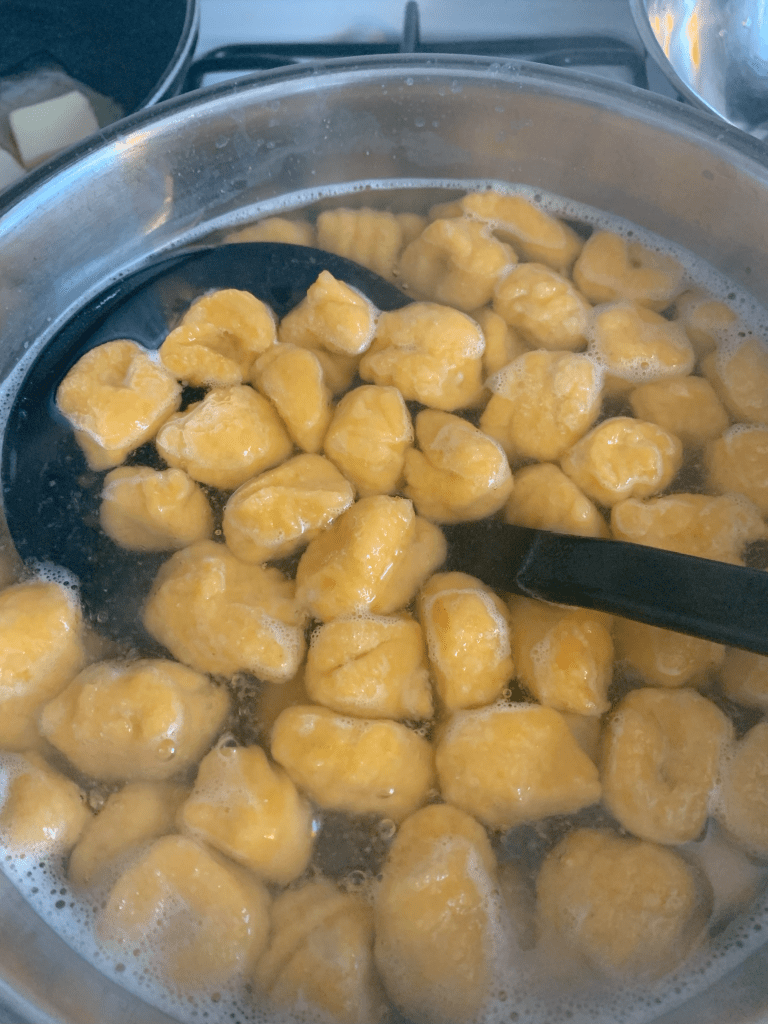
While the gnocchi are cooking, melt butter in a pan and infuse it with sage leaves.
Once the gnocchi are cooked, drain them and toss with the sage-butter sauce.
Top with grated Parmigiano Reggiano or Pecorino cheese (or a mix of the two of them) and serve.
Tips
This dough may feel soft while kneading, but that is normal. Avoid adding too much flour to the dough; the amount in the recipe is sufficient. The only exception is if you boil squash or potatoes in water — in that case, you may need to add extra flour due to the higher moisture content. The best cooking methods are using a Dutch oven or microwave oven.
Choose a squash variety that is not overly sweet or too fibrous (avoid spaghetti squash). Acorn and butternut squash work particularly well.
You may use corn starch instead of potato starch. I tried both and the results are similar; starches are very helpful in case you want to freeze your squash gnocchi.
Storage
If you want to freeze the gnocchi, prepare a large tray, cover it with a clean kitchen cloth, and sprinkle the cloth generously with semolina flour. Then, place the gnocchi on the tray and freeze for about 2-3 hours. Afterward, you can transfer them to freezer bags and seal.
I do not recommend storing uncooked gnocchi in the fridge once prepared. If you plan to prepare the gnocchi and eat them later (same day or within a few days), you can precook them in salted boiling water. Drain them, add a drizzle of oil, mix, and let them cool before storing in the fridge in an airtight container. With this method, they can last up to 3 days when stored in the refrigerator.

 casaboston.blog
Leave a comment