
I recently analyzed focaccia recipes (here) from 14 Italian Authors and Cooks. I checked the most common ingredients, the amount of oil, and the ratios between water and flour. I then computed the averages of the fractions and ratios, and the Euclidean distances between the various recipes, to find which recipe seemed the most “balanced” or “central.” The winner was La Focaccia Infallibile (The Foolproof Focaccia) from the popular magazine La Cucina Italiana, written by Giorgia Di Sabatino #cookthelook: https://www.lacucinaitaliana.it/tutorial/i-consigli/come-fare-la-focaccia-in-casa-10-segreti-per-prepararla-a-regola-darte/
I adapted the amount of fresh yeast into dry yeast since the first is not available here in the USA. I also used a mix of flour to reach the proper texture and calculated exactly how much additional oil was needed for the bowl, the topping, and baking. The original recipe uses terms such as un po’ – meaning “a little.” This is a bit vague, so I tightened up these loose ends un po’.
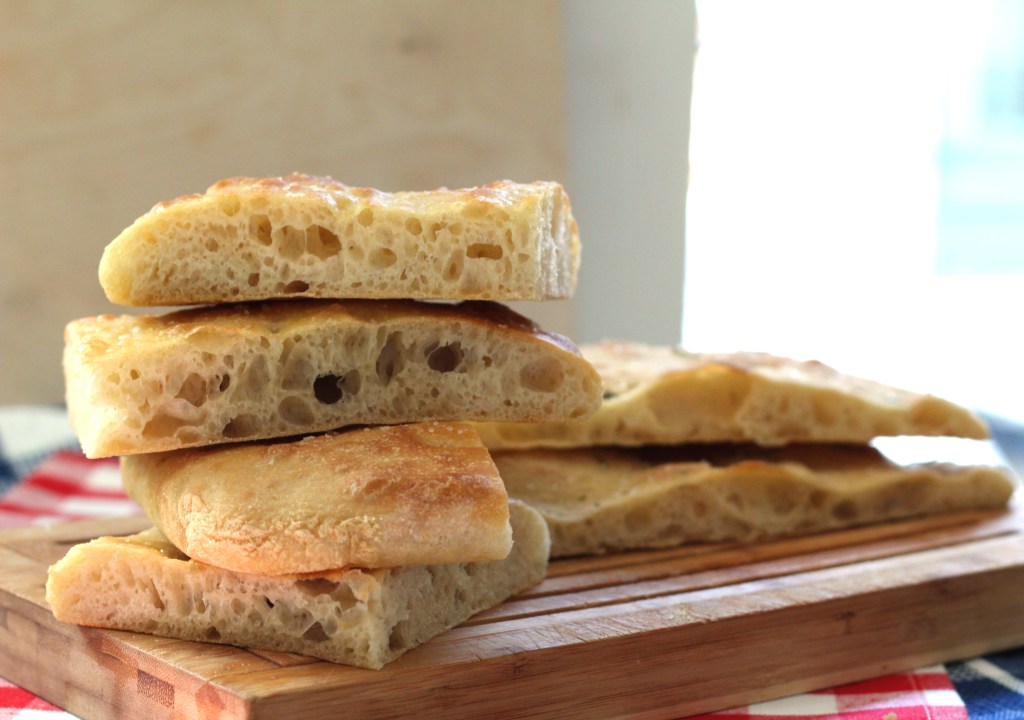
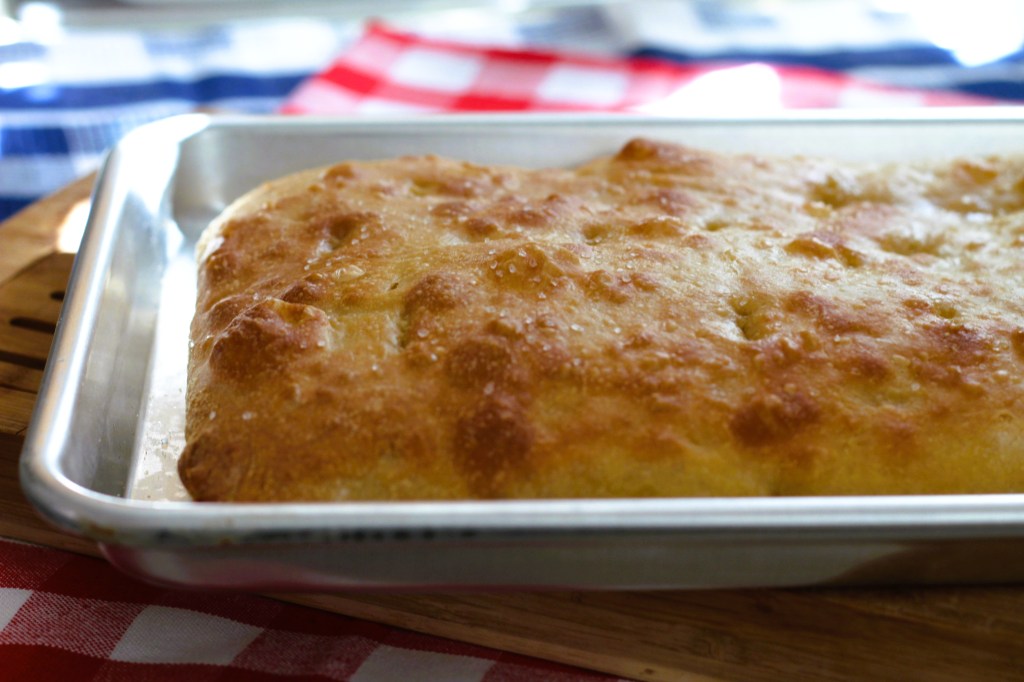
The result is tasty, bubbly, and light – moist inside and crispy outside – as focaccia is meant to be.
Here is the recipe.
Ingredients
- All-purpose flour 250 g (2 cups)
- Bread flour 250 g (2 cups)
- Water room temperature 420 g (1¾ cups) + 1 tbsp for the topping
- Extra virgin olive oil 20 g (1½ tbsp) for the dough
- Extra virgin olive oil 1 tbsp for the bowl
- Extra virgin olive oil 1 tbsp for the topping
- Extra virgin olive oil 1 tbsp for the pan (if using parchment paper, otherwise you may add 2 tablesppons)*
- Dry yeast 1.5 g (½ tsp) + 2 tablespoons of water at room temperature
- Salt 12 g (2 tsp) + 1 gram for topping
Semolina flour (about 225 g) – this does not go into the dough but is used for preventing the dough from sticking while be stretched, and it should be re-used for other focaccias.
Method
1. Mix the dough
You can work the dough with your hands or, if you have one, using a stand mixer. In a bowl mix the 2 types of flour and gradually add the water to the dough, mix until the water is well incorporated and the dough becomes stretchy. Let it rest covered for at least 20 minutes.
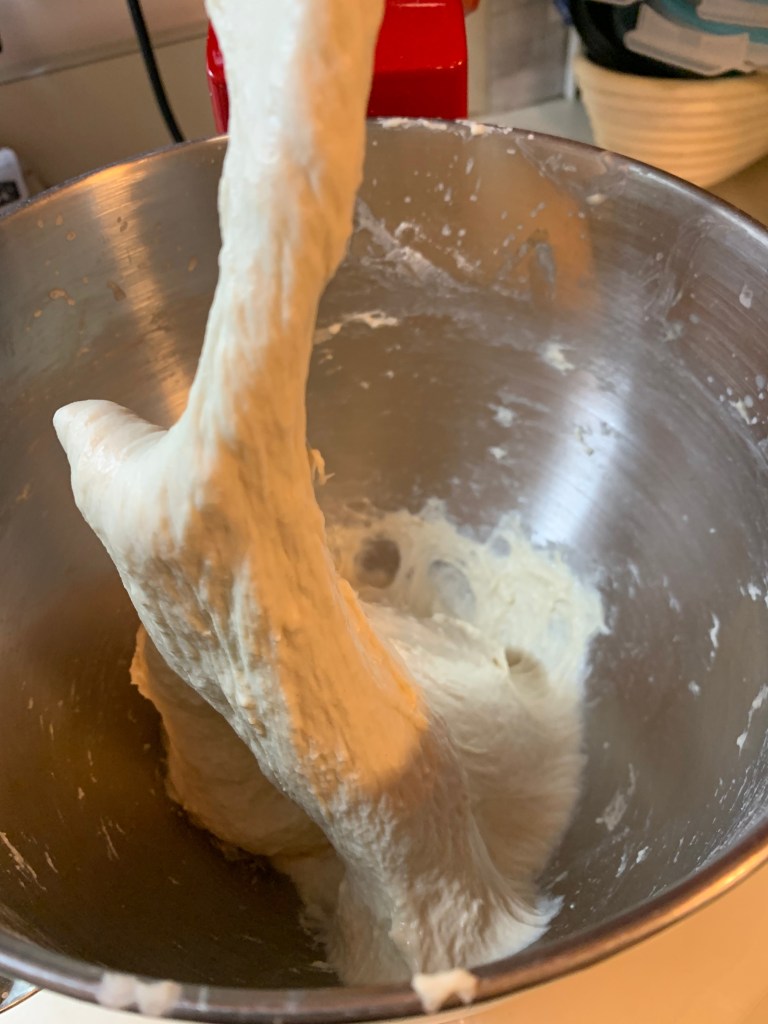
After 20 minutes, melt the dry yeast with 2 tablespoons of water in a small cup (an espresso cup works well). Pour the yeast into the flour and keep on mixing. Add the extra virgin olive oil, and finally the salt. The dough will be quite hydrated and sticky, which is good.
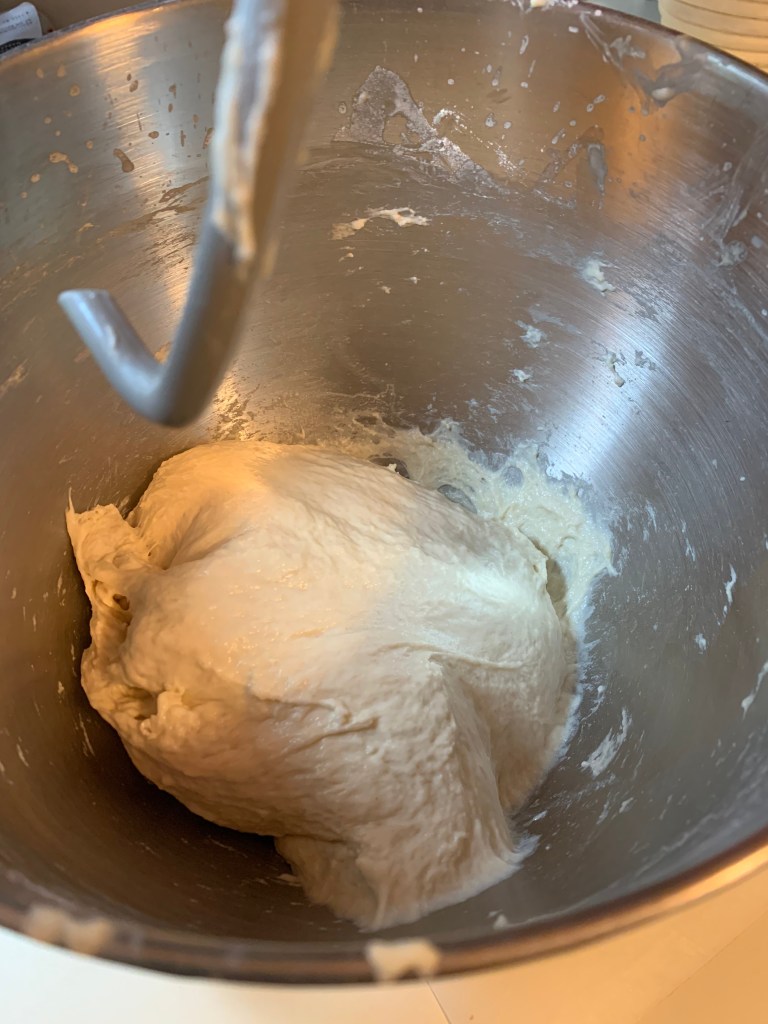
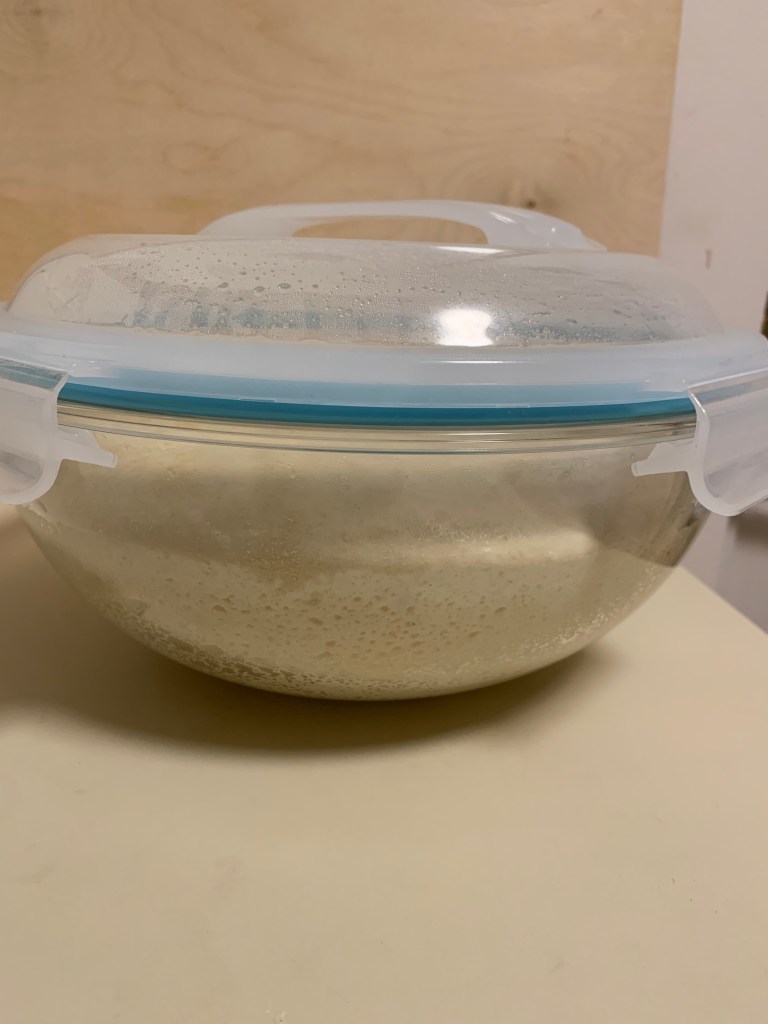
Grease a large bowl with 1 tbsp of oil (using a brush) and add the dough. Give the dough a few stretches, then put the dough rest in a closed container or covered with plastic wrap, or inside a turned-off oven until it has doubled in size.
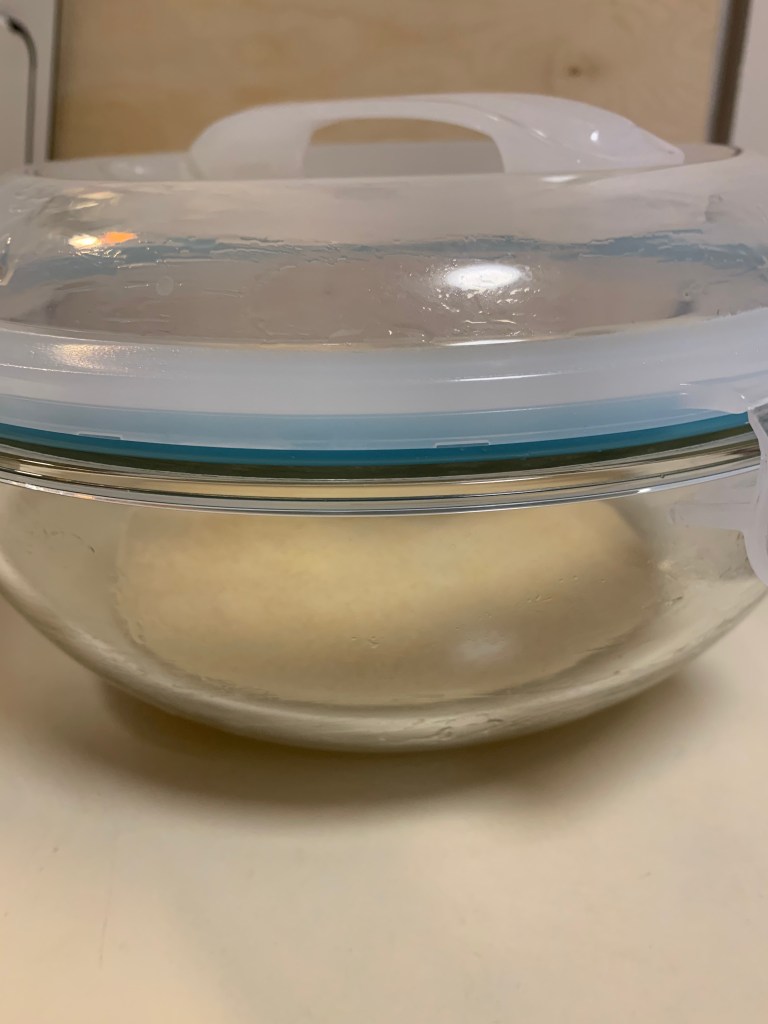
I tried at room temperature on a day we had roughly 14 degrees C and it took 5/6 hours. The time can vary depending on your temperature. If you prepare the dough in the evening and place it in the fridge overnight, in the morning you can take it out and place it at room temperature, and it will double in 3 or 4 hours.
2. Shape the focaccia
Once the dough has doubled, put the semolina flour into a baking tray. Gently pour the dough into the semolina and flatten without pushing too much – you want it to keep the nice bubbles inside. Line a baking tray with parchment paper and grease with 1 tablespoon of olive oil using a brush. Place the stretched dough into the pan, press it using your fingers (if you prefer you can use a fork to pierce the focaccia here and there), and let it rest for about another hour. I prepared a half-pan and another small one because my oven is small, but if you have a regular-sized oven, you can place the whole dough into a single pan.
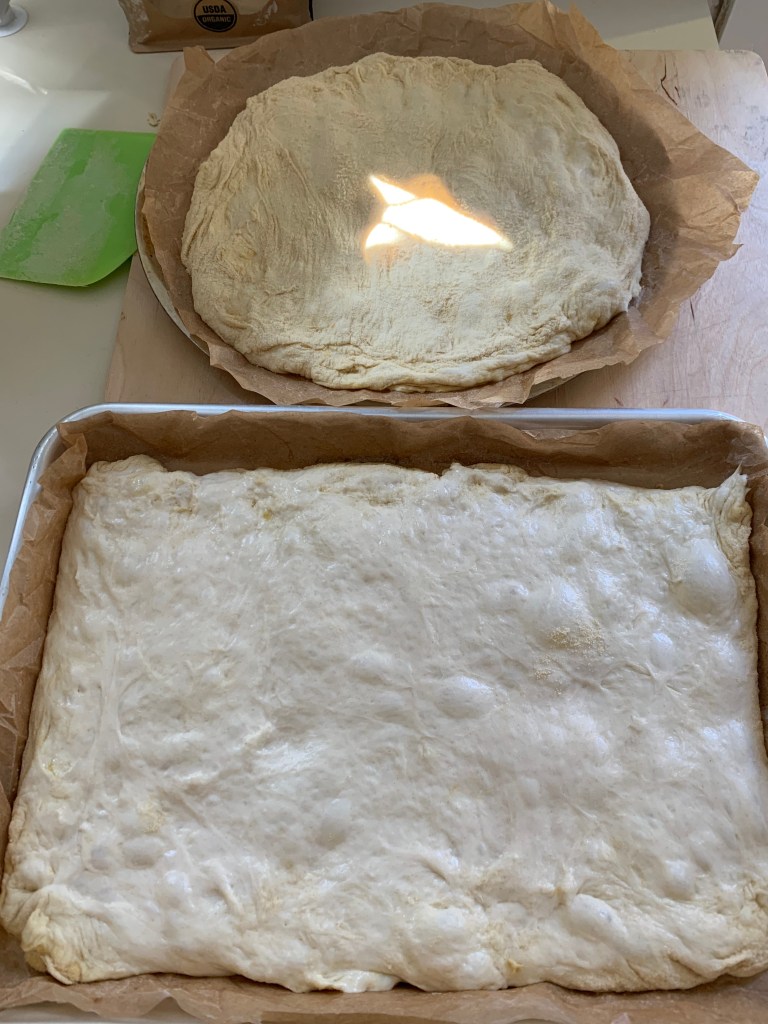
3. Prepare the topping and bake
Pre heat the oven to 230°C (450°F). Mix 1 tbsp water and 1 tbsp oil for the topping in a small espresso cup and gently brush it over the surface of the focaccia.
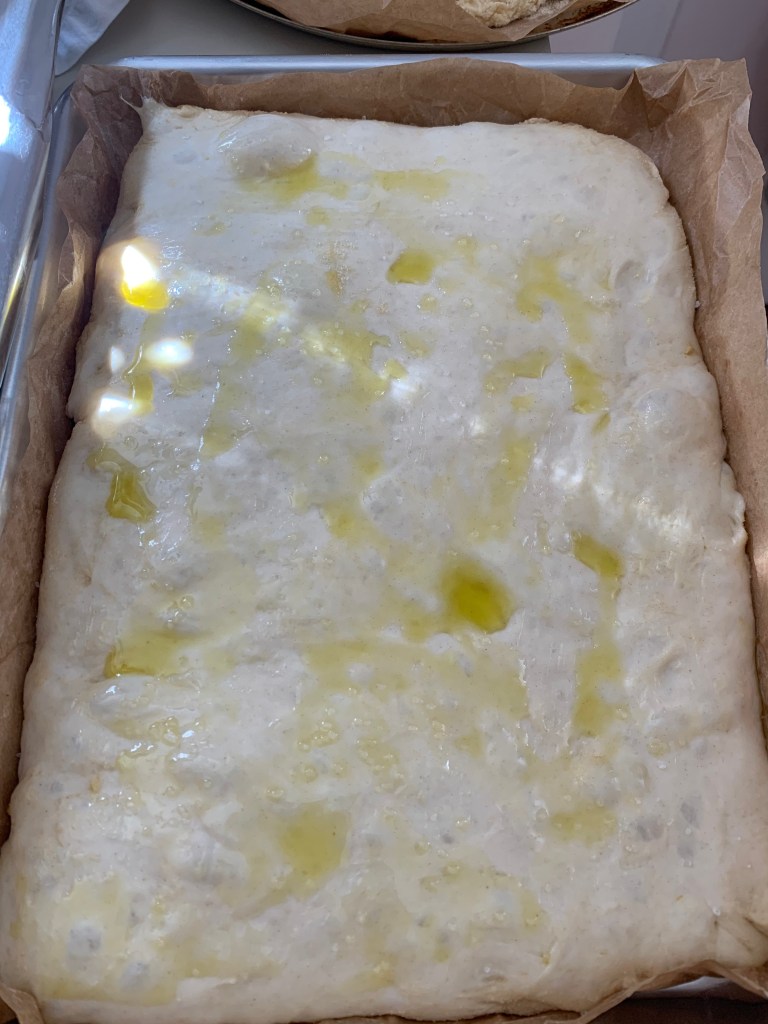
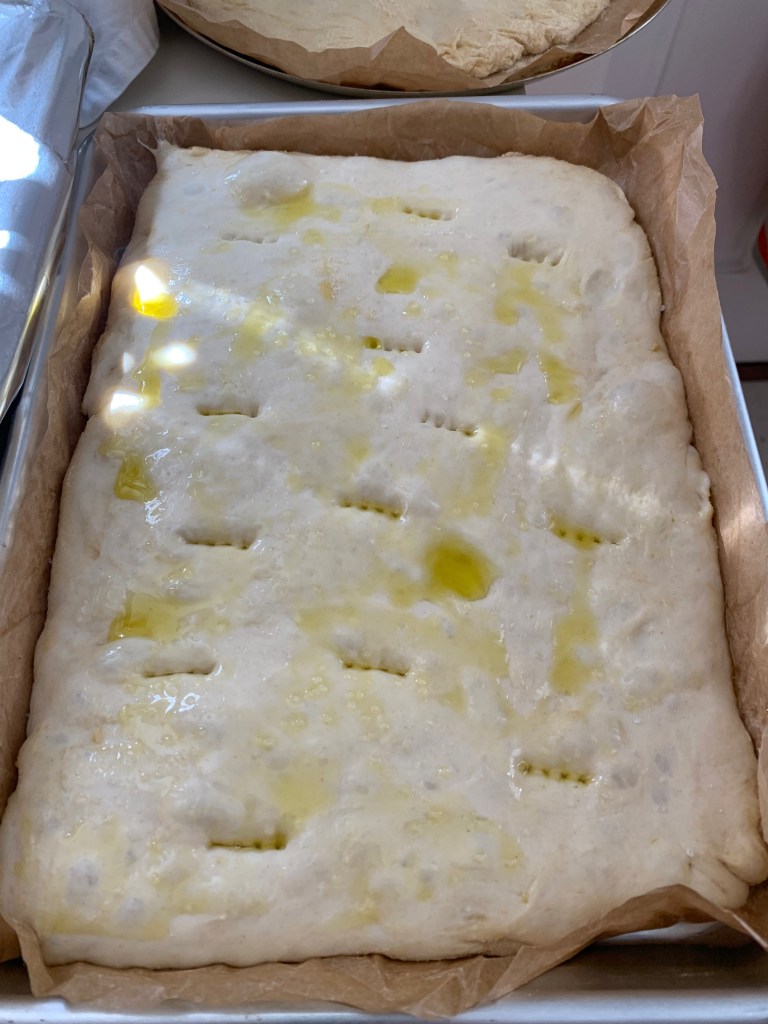
Sprinkle with salt and bake for about 25 minutes (it took only 15 minutes in my case, because I divided the dough into two smaller focaccias).
Take out of the oven and enjoy.
Tips
I used parchment paper because the dough is highly hydrated, and I do not want it to stick to the pan. I added oil to the parchment paper because I want the base of the focaccia to be golden and crispy.
It is important to consider the small amount of yeast used in this recipe thus the longer proofing. If you are in a hurry, you should increase the amount of yeast accordingly.
This recipe does not include any sugar or honey, but you can add a teaspoon of honey to the dough, because it helps the proofing and helps create a nice crust.

 casaboston.blog
Leave a comment