
For this analysis, I used R software (The R Project for Statistical Computing). For the figures, I mainly used the packages Tidyverse and Tidyplots.
The other day, I was scrolling through an Instagram post where a famous (and talented, and simpaticissima) Hollywood actress was preparing focaccia. In the video, she seemed to add a lot of oil to the bowl and on top of the dough before the first proofing, on top before letting it rise again, and then once again in the pan and on top before baking. The readers’ comments were quick to appear. One Italian reader commented: “too much oil”; another reader promptly replied that olive oil is healthy and that there’s no such thing as “too much oil.”
This isn’t the first time I have come across opinions claiming that certain ingredients can be used without limits. Another example is the use of large amounts of garlic in Italian recipes.
But doesn’t “too much” of an ingredient overpower the other flavors?
How can we quantify “too much oil”? And how can an inexperienced reader – perhaps on a diet – know whether the fat in a recipe is within average levels or not? In this analysis, I focus on olive oil, as it was the topic of the Hollywood-style focaccia video and discussion. (Note, for the rest of this article, “olive oil” means “extra virgin olive oil.”)
I collected focaccia recipes by top Italian authors and chefs, and here are a few key summary statistics. I included several top food bloggers, including those specialized in baking, and the recipes of a few famous chefs, such as Locatelli. The list of blogs can be found at the end of this article.
What Ingredients Are Typical for Focaccia in Italy?
The chart below shows all the ingredients listed by the chefs for the dough, where I have converted all quantities into grams.
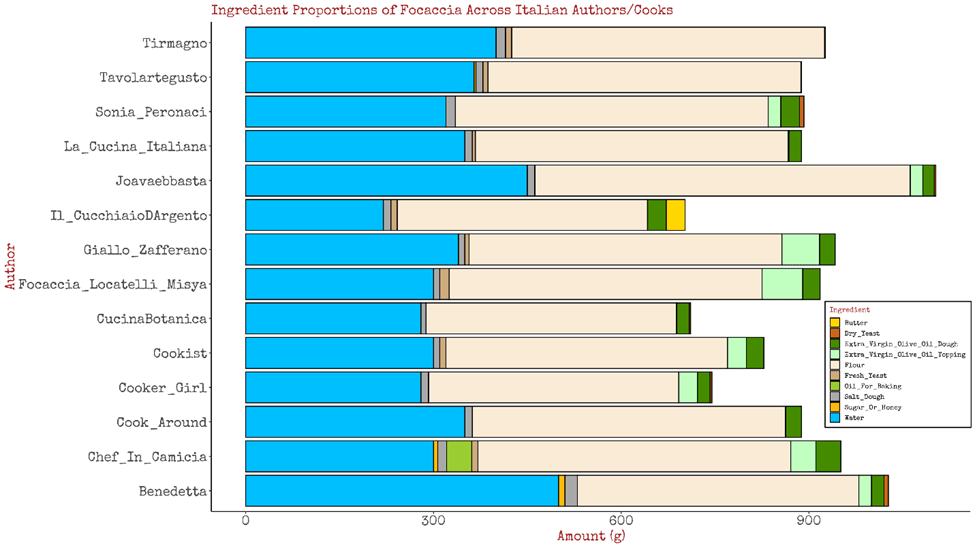
The common ingredients are flour, yeast (both dry and fresh — in Italy, 25-gram cubes of fresh yeast are widely used), sugar or honey, salt, water, and oil for browning the top. In Italy, an emulsion of water and oil is typical for this purpose. The precise amount of oil to add to the pan to prevent the focaccia from sticking during baking is indicated by only one Italian author.
As we can see from the chart, some quantities are quite similar. The water quantities, shown in blue, range from about 300 to 500 grams, with the exception of the recipe from the magazine Il Cucchiaio d’Argento, which uses 220 grams of water for 400 grams of flour — but it also includes butter in the dough, which is a unique case.
The total amount of oil used in the various recipes is shown in green, and these, too, are mostly similar across the recipes.
To flavor the surface of the focaccia, almost all Italian authors use salt, while three authors use rosemary (these small amounts of herbs are not included in the chart).
What Is the Ideal Ratio of Oil in the Dough and What Do Experts Say?
When it comes to the “behavior of oil in dough,” Harold McGee explains that experiments with bread dough have shown that the ideal fat ratio is between 3% and 4.5%. The Italian baking consultancy website Lievitomania, run by Francesca Gandolfo, confirms similar percentages but clarifies that a fat percentage lower than 2% does not contribute any noticeable characteristics to the final product. Basically, this means: add a quantity between 3% and 4.5%, or do not oil at all.
Effects of Oil on Dough
Harold McGee also explains that the purpose of fat in dough is to make it softer and moister, because lipids slow down moisture loss by coating the starch granules. He states that a quantity of oil within the suggested range may increase the dough’s volume by up to 20%. This “boost” occurs even at very low concentrations of fat, but it also depends on another factor: the type of oil and its smoke point. According to McGee, there are still unknowns regarding the smoke point.
How Much Oil Do Italian Chefs Use in Their Dough?
What really interests us is the amount of oil used in the dough. Here we see that two authors, Tavolartegusto and Tirmagno, don’t use any oil at all.
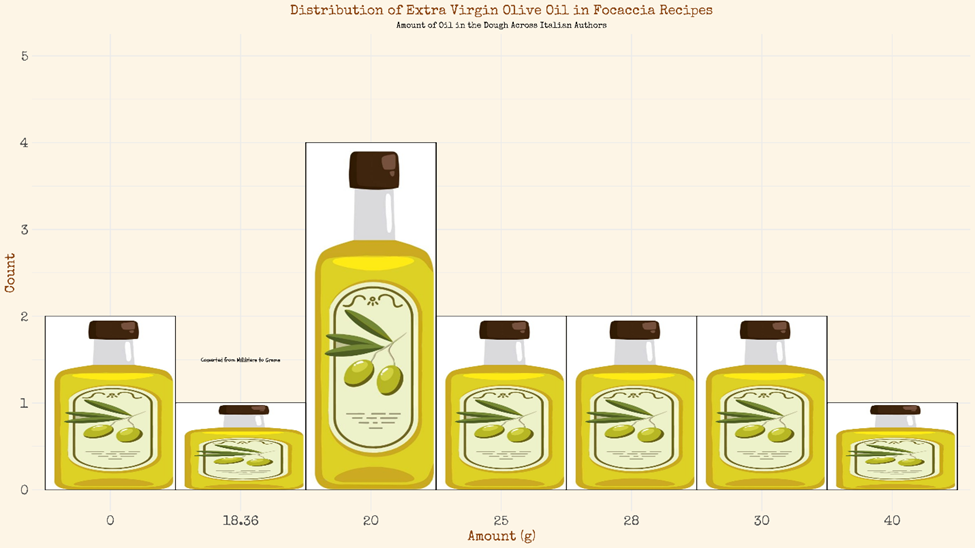
All the measurements in the Italian recipes were listed in grams, except one author who indicated the amount of oil in the dough in milliliters (so, using the conversion ratio 1 milliliter = 0.92 grams, the result is the not-so-round number 18.36 grams). If we calculate the ratio between the oil in the dough and the flour, we get the chart below. Seven authors use a flour-to-oil ratio between 3% and 5%, while five authors use percentages above 5% and up to 8%.
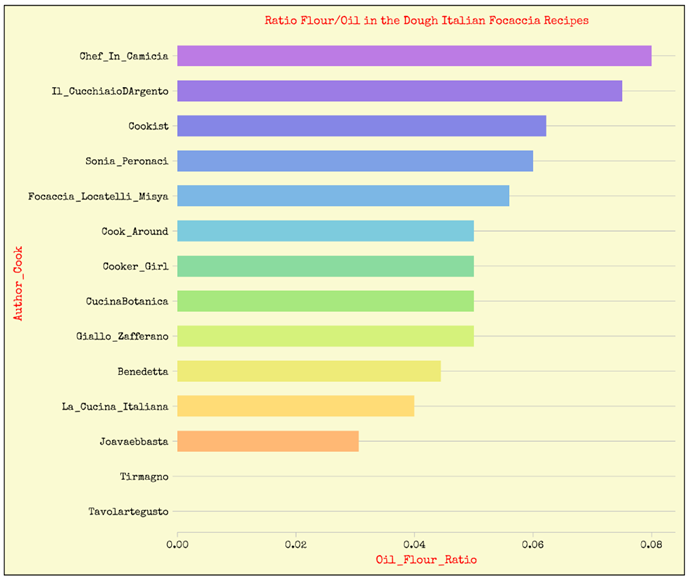
Apart from a few exceptions, we can see that these recipes are generally aligned with expert recommendations in terms of oil. Even here we must not be too quick to judge, because it is not clear how to treat the amount of water as another key ingredient of the dough (see below).
Is It Possible to Make Focaccia Without Adding Oil, as Seen in Some Italian Recipes?
Yes, because flour naturally contains a certain percentage of lipids. Therefore, if you season the top of the focaccia with oil or an emulsion of oil and water, it will be absorbed by the dough while also creating a crispy, golden surface. However, once again, the outcome depends on many other factors, such as the quality and characteristics of the flour, water, yeast, temperature, humidity, and so on.
And the recipes that do not use oil in the dough, what do they use?
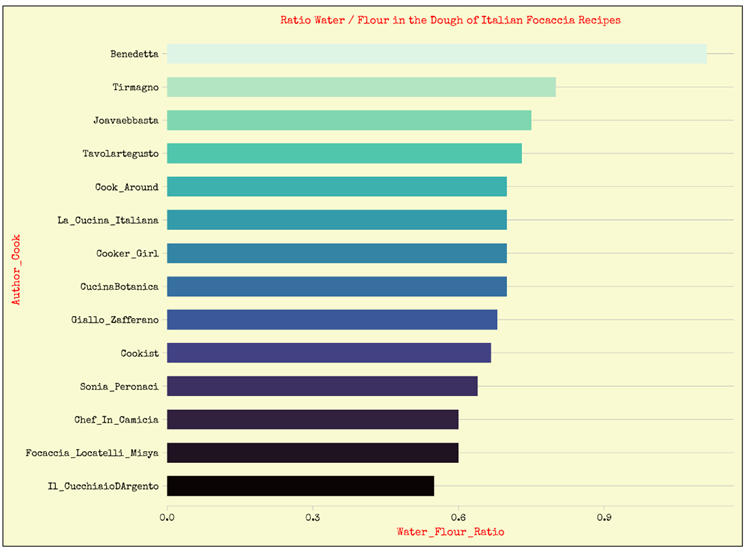
Water. Below we see the shares of water and flour in Italian recipes. The second and fourth authors are those who do not use oil in the dough: Tavolartegusto and Tirmagno. Jovaebbasta is third-lowest in terms of oil to flour. It is worth noting that Tirmagno and Jovaebbasta are social media legends of dough. The recipe of Cucchiaio d’Argento has the smallest ratio of water to flour, but the second-highest ratio of oil to flour. The Chef in Camicia recipe is third from last in terms of the water proportion ranking, but it has the highest ratio of oil to flour.
Oil used in recipes for the top of focaccia
As mentioned earlier, in Italy, it is common to create an emulsion of oil and water for the top of the focaccia.
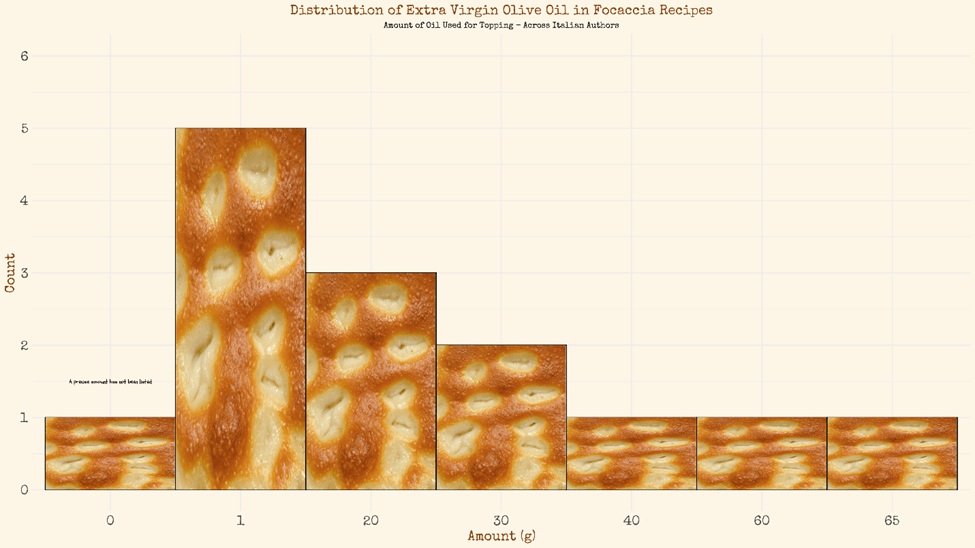
One Italian author does not specify how much oil to use on top. Five authors provide vague quantities like ‘a little’ or ‘q.b.’ (quanto basta = as needed). Three authors use 20 grams, two authors use 30, and another three use quantities up to 65 grams.
What changes if we add oil to the dough?
The nutritional values change, and these depend on the quantity and quality of the oils used.
Fats increase the preservation of the focaccia and slow down their cooling, making them ideal for those who sell take-away products (Francesca Gandolfo, Lievitomania). However, these advantages are mostly irrelevant for recipes made and eaten at home.
Other advantages
- Fats add flavor and aroma to the dough.
- They bring crispness if the cooking is done correctly.
- They affect the gluten network, making it more elastic.
Flour in Italian Recipes
Almost all Italian authors specify the type of flour to use (e.g., the one we call “Manitoba” in Italy), as well as the amount of protein required and the “strength” of the flour. This matters because the texture of the Italian focaccia tends to be different from the American focaccia recipes I have analyzed and tested. Italian recipes aim for a light, bubbly, and crispy focaccia, and Manitoba flour is perfect for these purposes. On the other hand, in the U.S., a soft and pillowy texture is preferred, hence the widespread usage of all-purpose flour.
Which recipe to use?
Regarding oil, McGee wrote that “the effect of fats in bread dough is more mysterious compared to recipes like puff pastry, which, for example, calls for large amounts of butter in layers (which is solid).”
Focaccia is a simple dough, like bread or pizza, so large amounts of olive oil, being liquid, have different effects. An excess of fat could exaggerate the product’s characteristics, leading to a flavor that is too strong, or a crust that is too thick and dark. Famous recipes like panettone call for high amounts of fat, but panettone involves special flours and different, more complicated stages, very different from focaccia. For this reason, panettone is made by professionals who can manage all the technical aspects of the preparation.
I calculated the average of all ingredients from the Italian recipes and the Euclidean distance between the various authors. The Italian recipe that is closest to this overall average is from a popular magazine called La Cucina Italiana. The name of the recipe is La Focaccia Infallibile (The Foolproof Focaccia).
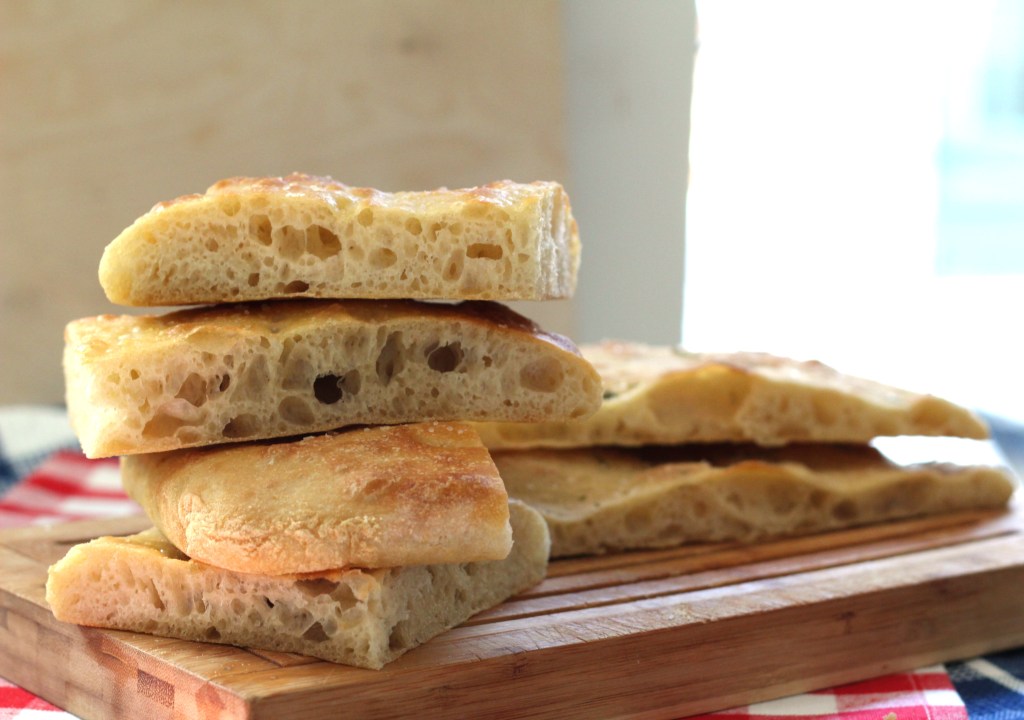
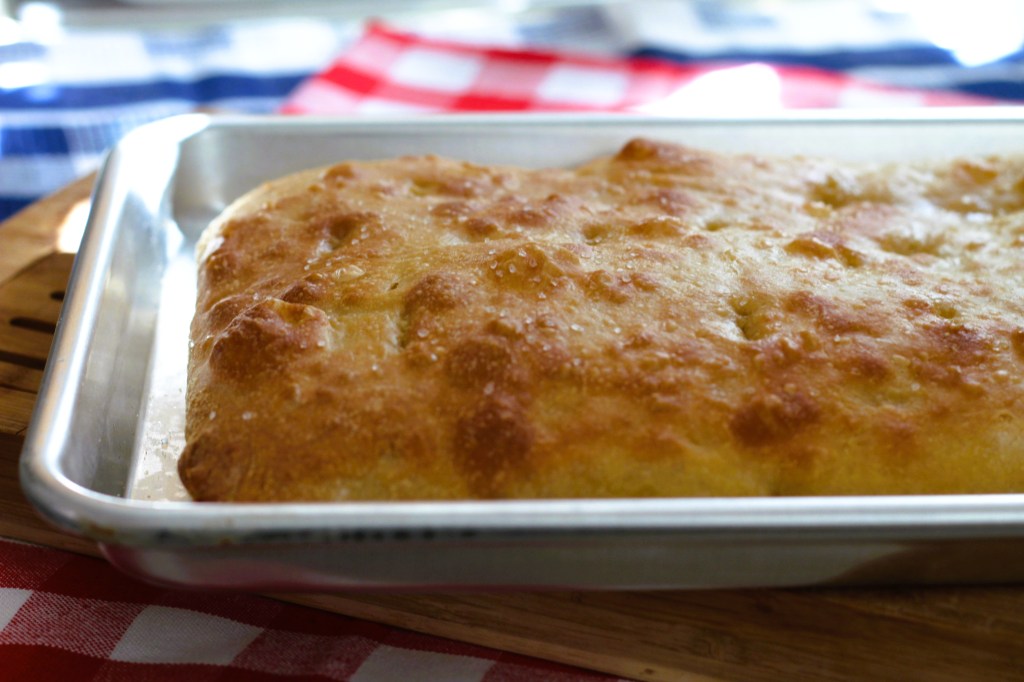
I tried the recipe, and it turned out very well, at least on my second test. While the ingredients are straightforward, there are differences between those available in Italy and those available in Boston, so small modifications are sometimes necessary. The recipe recommends flour type 0, which is a strong flour, but I had to figure out which US flour to use. I found that a mix of 50% bread flour and 50% all-purpose flour is good. The recipe calls for 5 grams of fresh yeast, but fresh yeast is not available here, so I used dry yeast. The standard conversion is 5 grams of fresh yeast = 1.5 grams of dry yeast. This is a small amount, so proofing time is therefore relatively long, and we must consider this when we plan to bake focaccia. The modified recipe is here.
Next analysis will be of American recipes for focaccia.
References
Gandolfo, F. (2022, August 7). OLIO NELL’IMPASTO? SI O NO? E QUALE? – Lievitomania. Lievitomania. https://www.lievitomania.it/2022/08/07/olio-nellimpasto-si-o-no-e-quale/
McGee, H. (2004). Il Cibo e La Cucina. Franco Muzzio Editore. Italian Edition. Pages 344-345.
- Giallo_Zafferano https://ricette.giallozafferano.it/Focaccia.html
- Benedetta https://www.fattoincasadabenedetta.it/ricetta/focaccia/
- Tavolartegusto https://www.tavolartegusto.it/ricetta/focaccia-morbida-ricetta-focaccia/
- Cucinabotanica https://www.cucinabotanica.com/ricette/focaccia-perfetta/
- Il Cucchiaio D’Argento https://www.cucchiaio.it/ricetta/ricetta-focaccia/
- Cooker_Girl https://www.cookergirl.com/blogs/lievitati/fucking-focaccia
- La_Cucina_Italiana https://www.lacucinaitaliana.it/tutorial/i-consigli/come-fare-la-focaccia-in-casa-10-segreti-per-prepararla-a-regola-darte/
- Focaccia_Locatelli_Misya https://www.misya.info/ricetta/focaccia-locatelli.htm
- CookAround https://www.cookaround.com/ricetta/Focaccia.html
- Cookist https://www.cookist.it/ricetta-focaccia/
- Tavolartegusto https://www.tavolartegusto.it/ricetta/focaccia-genovese-ricetta-originale/
- Chef_In_Camicia https://www.chefincamicia.com/ricette/focaccia-genovese
- Sonia_Peronaci https://www.soniaperonaci.it/focaccia/
- Tirmagno https://www.instagram.com/tirmagno/reel/C21_ilYosix/
- Jovaebbasta https://www.instagram.com/jovaebbasta/reel/Cxh8tQeIjda/

 casaboston.blog
Leave a comment