
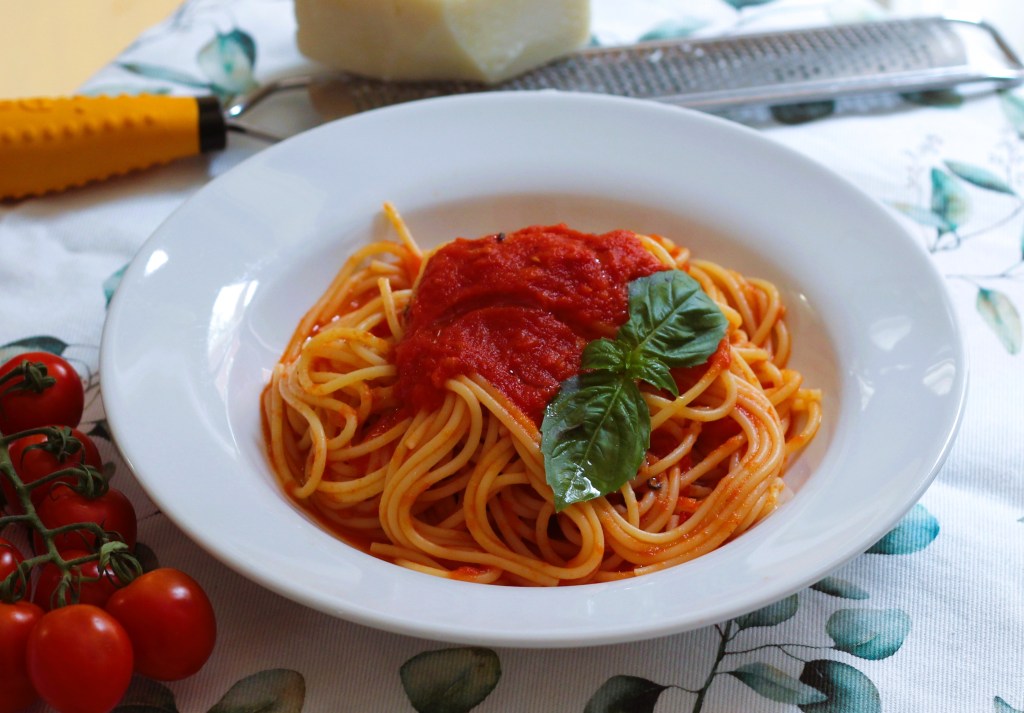
I came up with the recipe for emulsified tomato spaghetti while putting together a list of simple yet flavorful dishes for “Student in the Kitchen,” a new section of my blog designed especially for students.
Spaghetti with tomato sauce, in all its simplicity, carries a rich history tied to its basic ingredients: pasta, tomato, garlic or onion or leeks, extra virgin olive oil, and basil.
To achieve our goal — making a flavorful pasta dish quickly — we’ll use the emulsification technique, which helps extract the flavors of the ingredients. With one small trick, the sauce will keep a bright, vibrant red color and save you time, since the sauce will cook while you prepare the rest of the recipe.
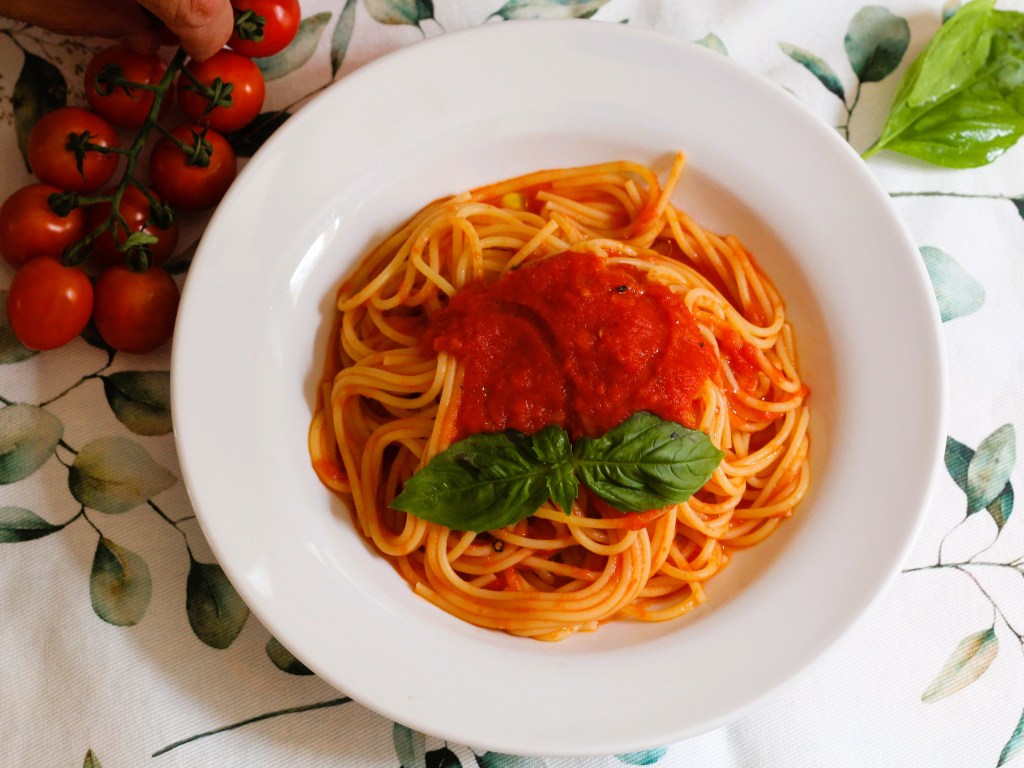
The emulsified tomato sauce has many advantages. First, you can use whole peeled tomatoes and visually check their quality. The color and natural sweetness of this variety make the sauce flavorful and fresh without the need for extra ingredients. Also, the emulsification technique blends the tomato thoroughly, making the dish smooth and pleasant even for those who don’t like tomato seeds or small pieces of onions or leeks.
You’ll end up with a generous batch of fresh tomato sauce you can store in the fridge and use to season pasta with just a hint of chili, some fresh vegetables, olives and capers, or even to make an amazing eggplant parmigiana like the one I posted here. This sauce is also delicious as a filling for crescioni romagnoli using this piadina recipe as a base.
Be sure to check the equipment list at the end of the recipe — having the right tools ready makes preparing this simple dish so much easier!
Ingredients for 6 servings
- Spaghetti 500 g (about 1 lb)
- Whole peeled tomatoes 800 g (about 28 oz)
- Leek (or onion) 1 leek or ½ onion
- Extra-virgin olive oil 3 tablespoons
- Grated Parmigiano Reggiano or Pecorino to taste*
- Salt to taste
- Fresh basil leaves 10
- Black pepper (optional) to taste
Cost estimate:
- Total recipe cost without Parmigiano Cheese: $10.97, $1.83 per serving.
- Total recipe cost with *Parmigiano Cheese: $13.73, $2.29 per serving,
The addition of Parmigiano Reggiano cheese is a personal preference, and the quantity used can vary significantly, which also impacts the overall cost of the recipe. Prices are based on August 2025 figures, utilizing ‘De Cecco’ spaghetti and ‘Cento’ organic peeled San Marzano tomatoes sourced from Whole Foods.
Preparation
Prepare the sauce base
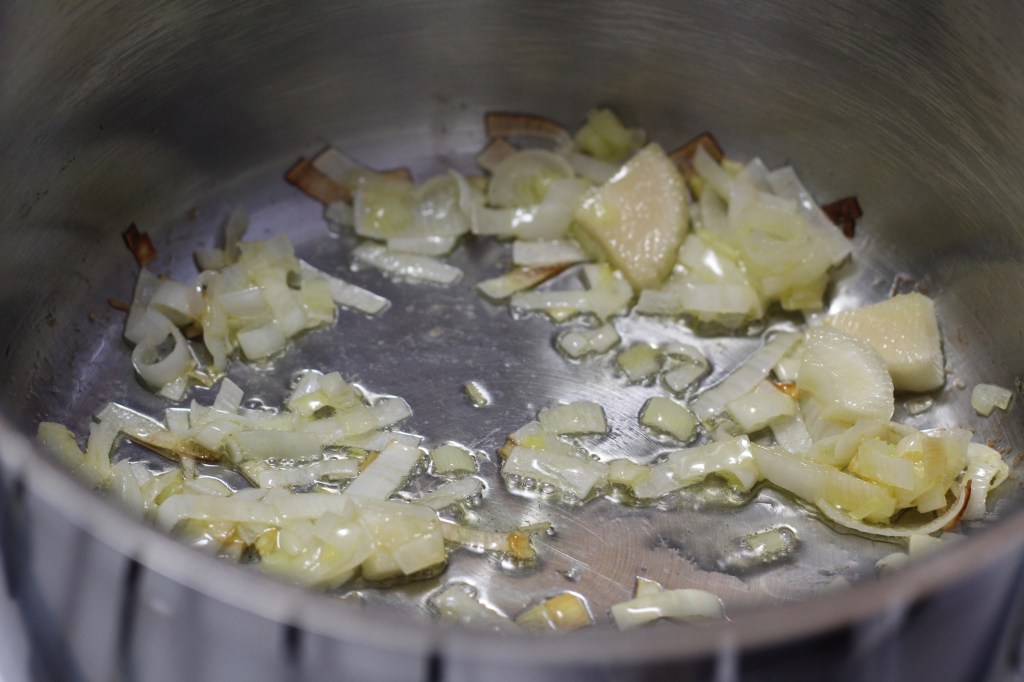
Roughly chop the leek (or onion) with a knife or food processor and sauté it in a tall, narrow pot with the olive oil.
Blend the tomatoes
Pour the peeled tomatoes into a tall container and blend thoroughly using an immersion blender.
Start cooking the sauce
Add half of the blended tomatoes to the sautéed leek and cook for about 10 minutes (set the remaining tomatoes aside).
Emulsify
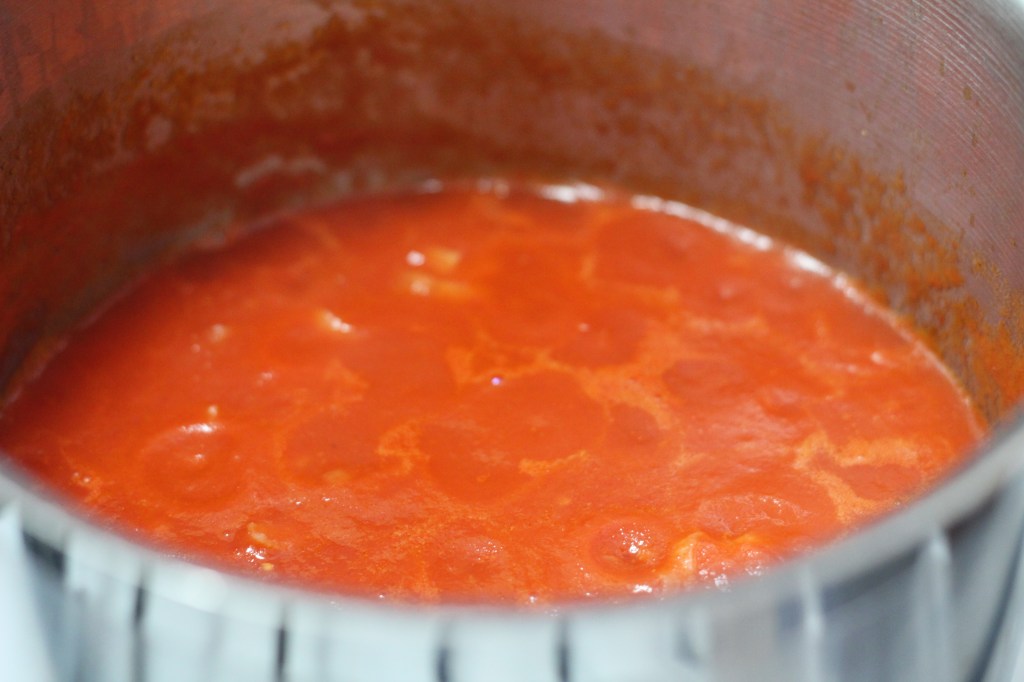
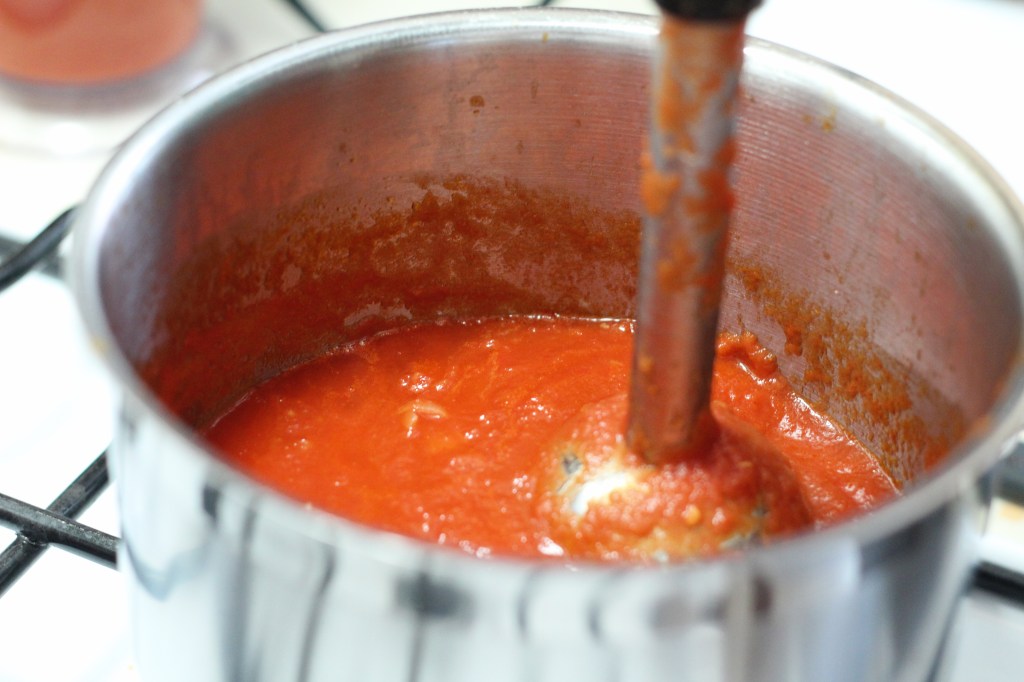
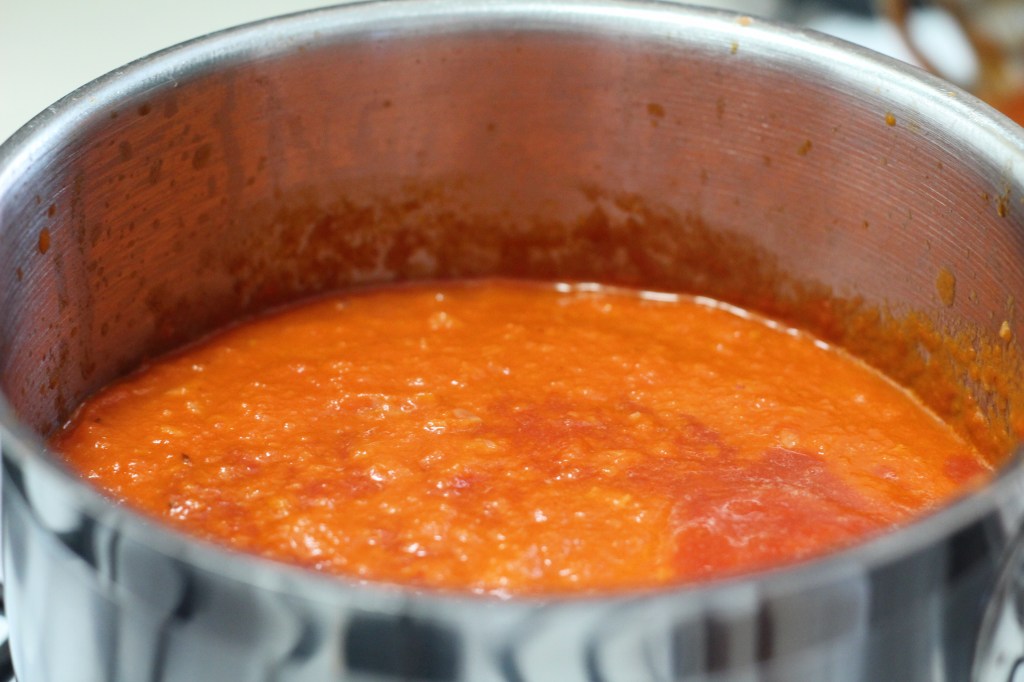
Use the immersion blender again to blend the cooked tomato and leek mixture directly in the pot. Then, add the reserved blended tomatoes to the pot, and stir gently with a spoon.
Simmer the sauce
Return the pot to low heat, add a few basil leaves, and let it simmer while you cook the pasta.
Cook the pasta
Boil the spaghetti in plenty of salted water (the salt to pasta ratio is 1 tablespoon salt for 1 liter of water). Proceed cooking the spaghetti according to the cooking time indicated on the pasta box, drain the pasta, keeping a little of the cooking water aside.
Finish and serve
Transfer the cooked spaghetti back to the pan and add the emulsified tomato sauce.
Add a bit of the reserved cooking water if needed, and remove from heat.
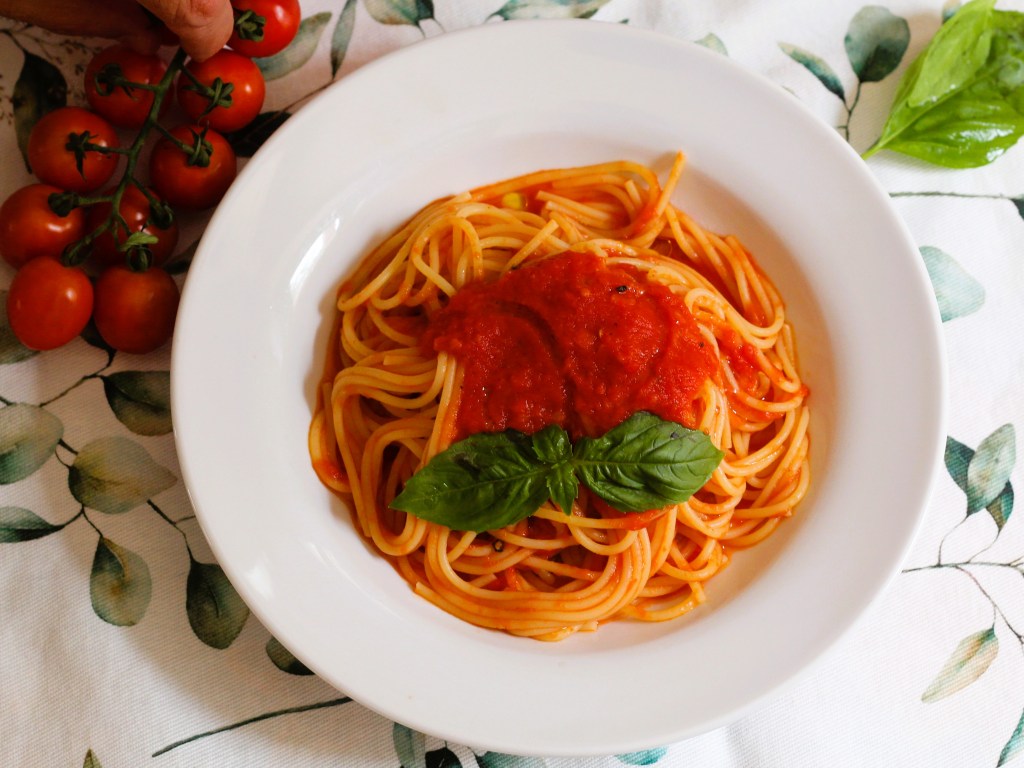
For a glossy finish, drizzle with a little extra olive oil and add freshly ground black pepper if you like. Toss quickly, plate the pasta, and bring it to the table.
Garnish with fresh basil leaves and serve immediately.
Equipment Needed
- Tall, narrow pot – for cooking and emulsifying the tomato sauce
- Large pot – for boiling the pasta
- Immersion blender (hand blender) – to blend and emulsify the tomatoes
- Tall container – to blend the tomatoes without splashing
- Sharp knife – for chopping the leek or onion
- Cutting board – for prepping vegetables
- Wooden spoon or heat-resistant spatula – for stirring the sauce and pasta
- Large pasta spoon or tongs – for mixing and serving spaghetti
- Colander – for draining the pasta (while saving some cooking water)
- Measuring spoons – for the olive oil (if you want precise amounts)
- Serving bowls or plates – for plating the pasta
- Cheese grater – if grating fresh Parmigiano or Pecorino

 casaboston.blog
Leave a comment