
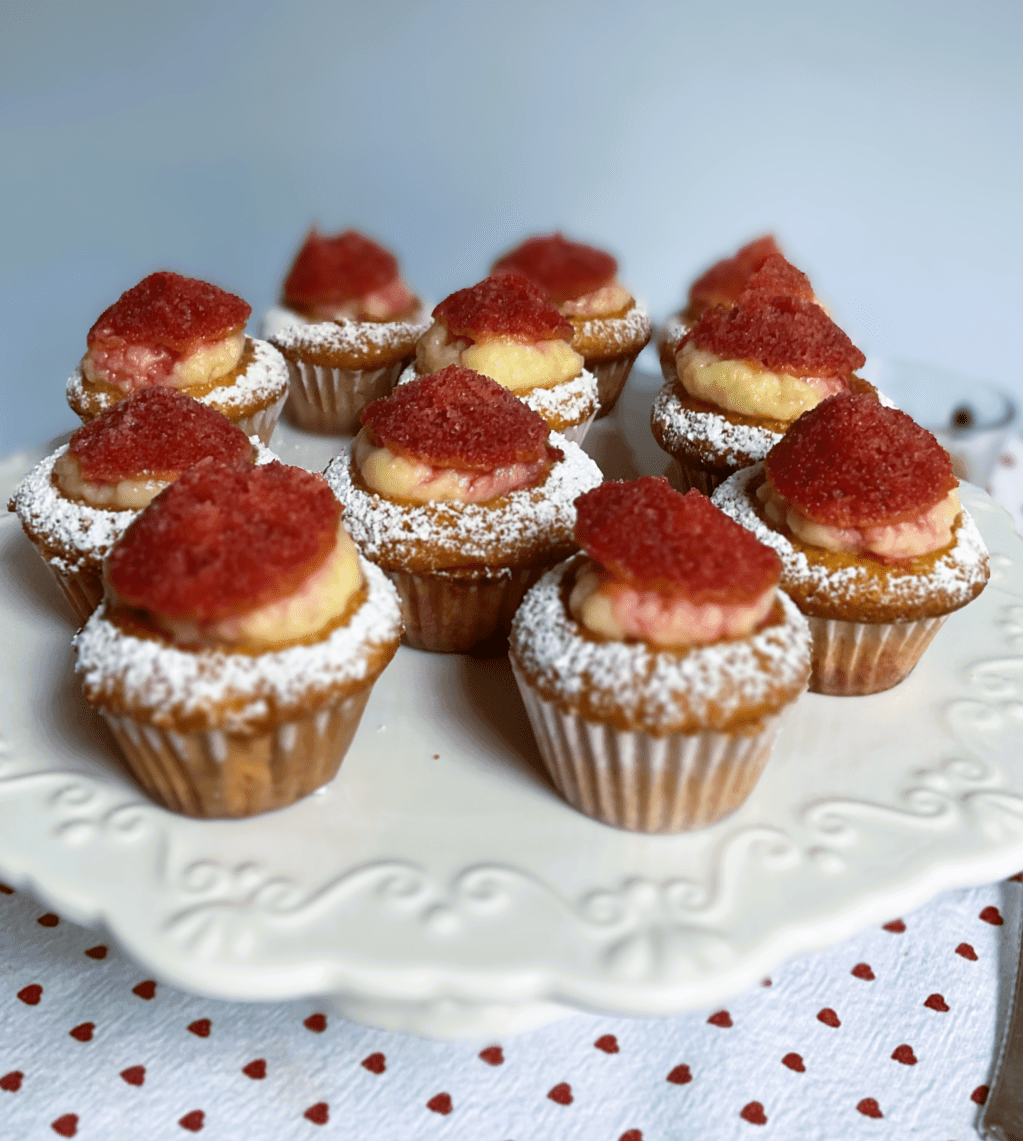
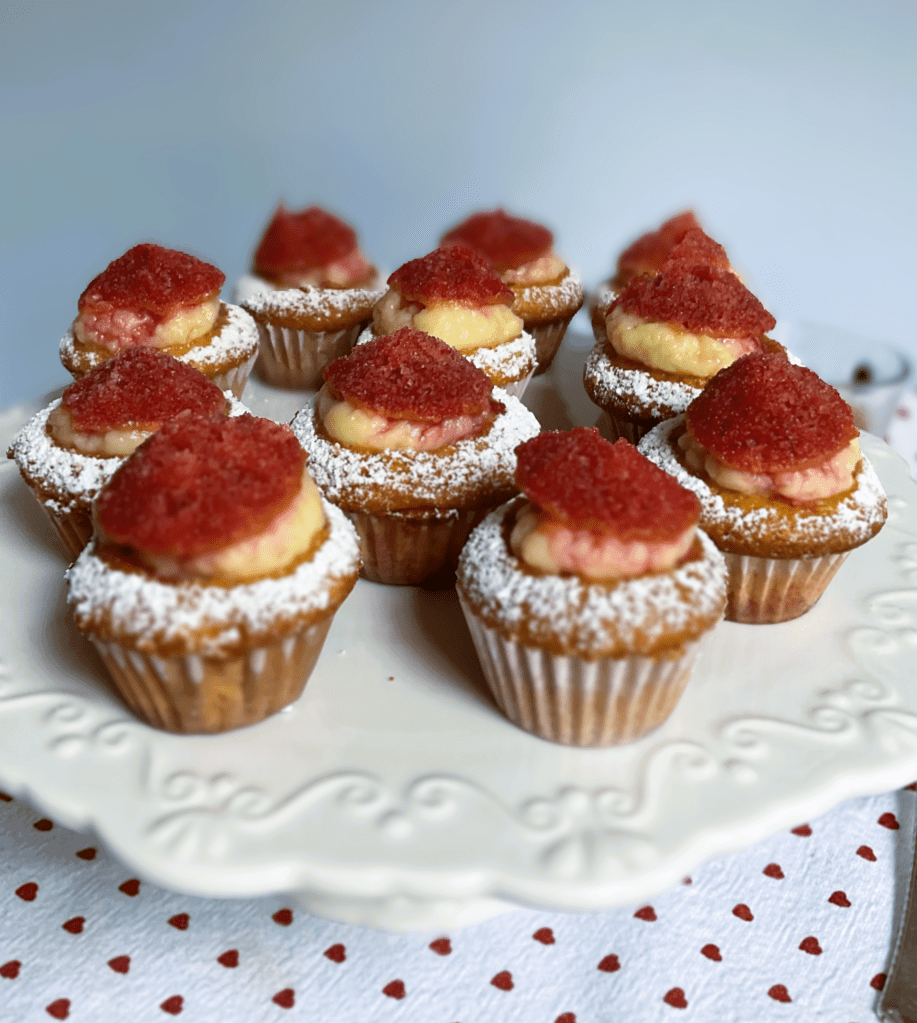
These little pastries are called “Cardinali”, and they came to my mind recently because they are both delicious and beautiful (the Conclave starting today might also have jogged my memory). Cardinali originate from Sardinia and are also known as “cardinales.” They resemble small muffins that are cut to form a “Cardinal hat” shape, which is then soaked in the liqueur Alkermes, and placed on a filling of soft lemon pastry cream.
Despite their ambitious name, their history is not well-documented, but they are considered a classic treat in Italian pastry making and are often made in a miniature version. The red color comes from a very fragrant, aromatic, and sweet liqueur: Alkermes (sometimes spelled “Alchermes”). Alkermes is widely used in Italy to make desserts such as zuppa inglese, pesche dolci (sweet peaches), syrup for layered cakes, and Carnival sweets. It appears to have Arab origins (the Arabic name was al-qirmiz), but it was the Spanish who introduced it to Italy. It became very popular in Florence, where it was considered an elixir of long life and was prepared by the monks at the Officina Profumo-Farmaceutica di Santa Maria Novella. The Medici family appreciated it greatly and helped make it known in France (Becchi, 2020).
In Sicily, Alkermes was called ‘Archemisi’, and was considered a remedy against fear or nightmares—a few spoonfuls would be given to a child after a fright (!) (Alchermes, 2006).
Modern recipes can vary, but Alkermes is generally made using alcohol, sugar, water, cochineal, orange peel, rose water, cinnamon, cloves, vanilla, cardamom, and anise flowers. Note that the red color traditionally came from an insect, the cochineal, though some modern producers use synthetic dyes.
You can buy Alkermes in the supermarket or make it at home as I did using this recipe—though I used natural beet extract instead of cochineal.
Here is my recipe for Cardinali:
Ingredients:
Flour: 200 grams
Brown sugar: 150 grams
Honey: 1 tablespoon
Olive oil: 50 grams
Milk: 100 grams
Zest of 1 organic lemon
Eggs (room temperature): 2
Baking powder: 8 grams
For the decoration:
Alkermes: 50 milliliters
Half a batch of pastry cream (see recipe below)
Powdered sugar
Method:
In a stand mixer or with a hand whisk, beat the eggs for a few minutes, then add the sugar and honey. Continue whisking until you have a nice thick foam.
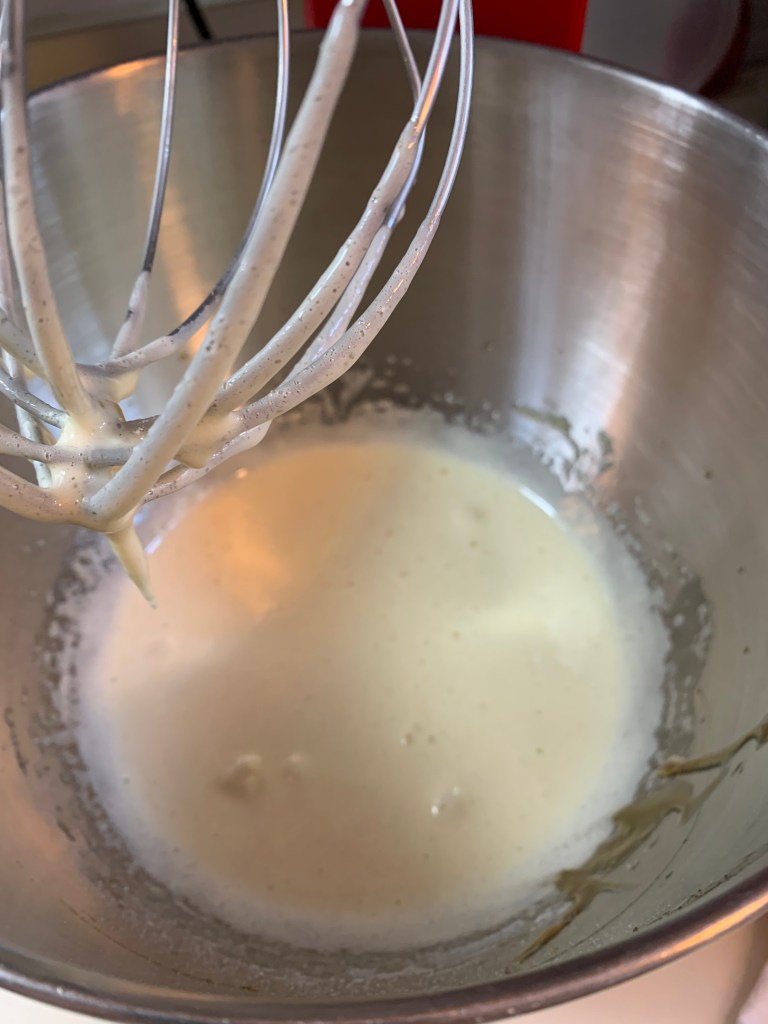
While whisking, slowly pour in the oil mixed with milk, then add the grated lemon zest.
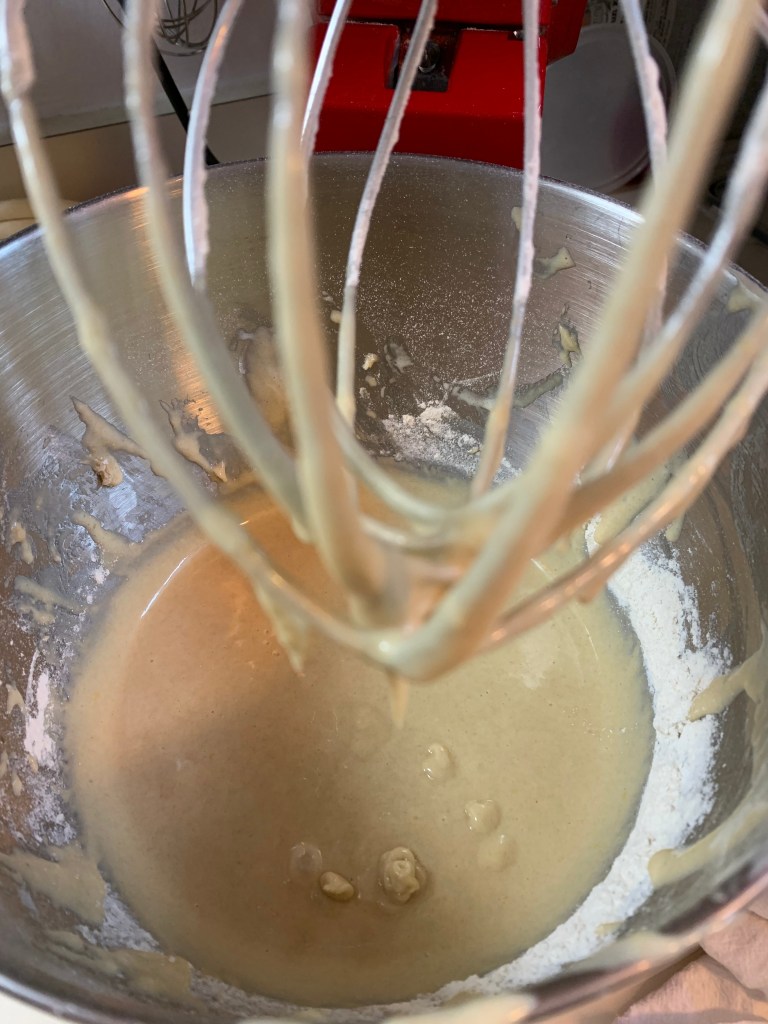
Once the above ingredients are incorporated, add the flour mixed with baking powder, and finally a pinch of salt.
Preheat the oven to 160°C (320°F).
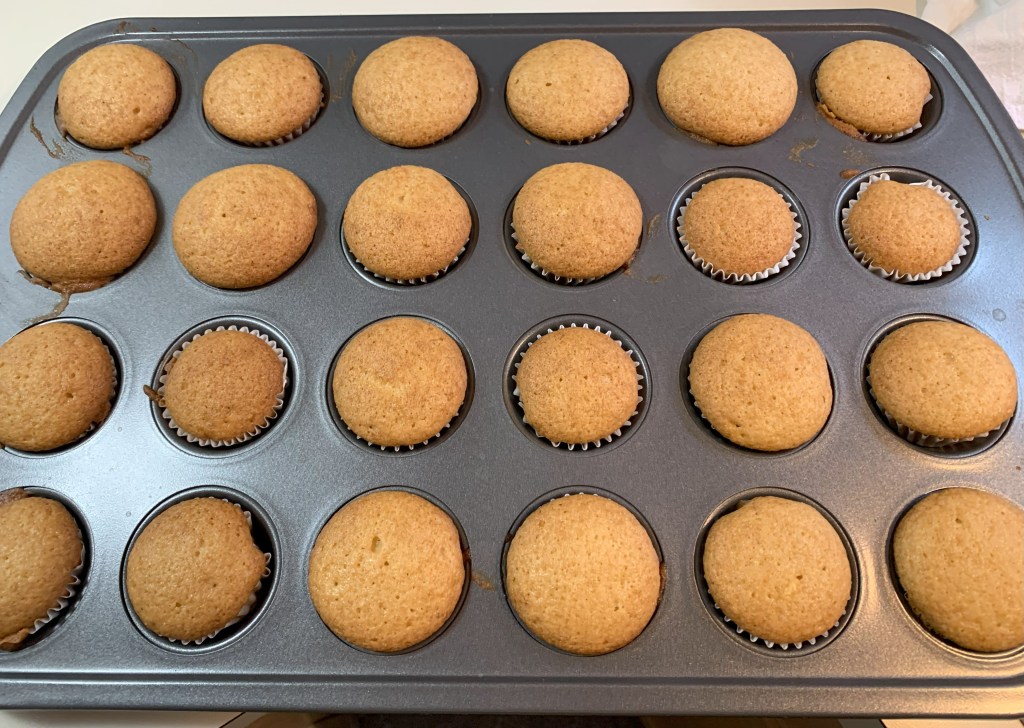
Place paper liners into the molds. Use whatever baking molds you have; I used a 24-muffin mold with a 1-7/8-inch diameter.
Now pour the mixture into the muffin liners.
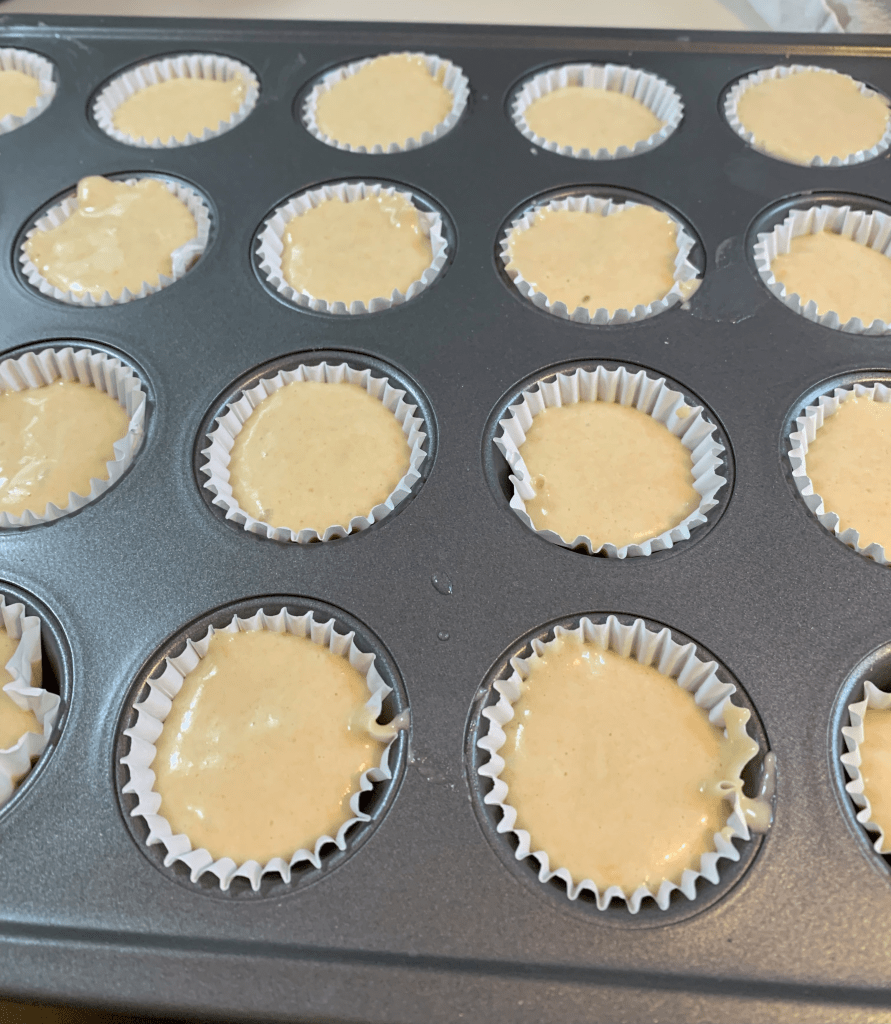
Bake for about 15 minutes, but adjust depending on your mold size—if larger, add a few more minutes of baking.
Meanwhile, prepare the pastry cream. If you have a favorite recipe, use it; otherwise, one is included at the end of this recipe.
Once the Cardinali are cool, use the tip of a small knife to carve out the center of each one, angling the blade to form a cone of cake crumb.
Soak the inner part of the Cardinali with Alkermes, being careful not to stain the outer part.
Fill the hollow with pastry cream, dip the crumb cones in Alkermes to color them evenly, and gently place them back on top of the cream, applying slight pressure.
Dust with powdered sugar and serve immediately or let them rest to allow the liqueur and cream to soak in.
Enjoy!
Pastry Cream:
Ingredients:
Milk: 500 milliliters
Sugar: 100 grams
Peel of 1 half organic lemon
Pure vanilla extract: 1 teaspoon (or a small piece of vanilla pod)
Egg yolks: 4
Cornstarch: 20 grams
Flour: 20 grams
Method:
In a bowl, whisk together the egg yolks and sugar, then add the cornstarch and flour, mixing well until the mixture is light and frothy.
In a saucepan, heat the milk with the lemon peel and vanilla until it reaches a boil.
Once boiling, strain the milk in two stages into the egg mixture and mix well. Return everything to the saucepan and cook, stirring continuously to avoid lumps, making sure to scrape the edges of the pan. As soon as the cream begins to thicken, lower the heat and keep stirring until it becomes smooth and creamy—this will take just a few minutes.
Pour the cream into a dish, mix well again with the whisk, cover with cling film in direct contact with the surface, and let it cool in the fridge.
Tips:
For a low alcohol version, you can dilute the Alkermes with water or with a simple syrup made from water and sugar.
To make the Alkermes syrup: Put 200 grams of water in a small saucepan, add 100 grams of sugar, and let it dissolve. Add the zest of one organic lemon, bring the mixture to a boil, then turn off the heat and add 50 ml of Alkermes. You may add extra beetroot coloring to boost the red. Let it cool and use as needed.
References:
Alchermes. (2006, September 5). Wikipedia.org; Wikimedia Foundation, Inc. https://it.wikipedia.org/wiki/Alchermes
Becchi, M. (2020, November 24). Alchermes: storia, curiosità e novità sul liquore rosso. Gambero Rosso. https://www.gamberorosso.it/rubriche/storie/alchermes-storia-curiosita-e-novita-sul-liquore-rosso/


 casaboston.blog
Leave a reply to mirnarossi Cancel reply